Showing posts with label indonesia. Show all posts

Friday, March 14, 2008

Selamat caught at Causeway? Part 2

The satire continues. According to a frequent visitor to Sophie's World, a joke is circulating as to why escaped Singapore terrorist Mas Selamat Kastari is likely to be in Malaysia and Indonesia.

The two neighbours of Singapore have clear signs that say "Selamat Datang" to welcome visitors. Selamat Datang is the common Malay phrase for "Welcome" or "Selamat is Coming" in this context.

Of course, there is a clear sign at the causeway that says "Selamat Datang" to all visitors -- legal and illegal -- from Singapore. :-)

Saturday, March 01, 2008

Selamat* Asean?

The escape of militant suspect Mas Selamat Kastari (The Straits Times pix) from a top security facility in Singapore has been hogging the headlines in the country for the past few days.

The news has raised plenty of eyebrows in Singapore. Many people wonder how the limping leader of the Al-Qaeda-linked Islamic militant network Jemaah Islamiah's Singapore cell could have walked out of the toilet of a detention centre in security-conscious Singapore.

The mystery is still being solved. In the meantime, it is heartening to read that Singapore, Malaysia and Indonesia are working together to recapture the fugitive who had wanted to blow up the Changi Airport and hijack a Singapore plane.

It is heartening to see the cooperation of the three littoral states of Asean in tracking the fugitive despite many bilateral problems among them.

Sophie's World hopes that the three countries could apply the same urgency to resolve all their outstanding bilateral problems.

* Selamat means save or safety in Malay, obviously a little pun on the name of the fugitive. :-)

Sunday, January 27, 2008

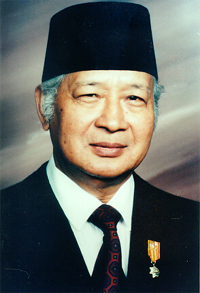
Suharto dies with chequered legacy

Former Indonesian President Suharto has finally succumbed to his illnesses, according to AP and BBC. According to an AP report, he died at 2.10pm (Singapore and Malaysia time) today. He was 86.

JAKARTA (Indonesia)
: Former Indonesian president Suharto, an army general who crushed Indonesia's communist movement and pushed aside the country's founding father to usher in 32 years of tough rule that saw up to a million political opponents killed, died Sunday. He was 86.

"He has died,'' Dr Christian Johannes told The Associated Press, adding that he died at 1.10pm (2.10pm Malaysian time).

Dozens of doctors on Suharto's medical team had been rushed to the Pertamina Hospital in the capital, Jakarta, after his blood pressure fell suddenly Saturday night. Suharto had slipped out of consciousness for the first time in more than three weeks of treatment, doctors said.

Suharto, had been in intensive care with lung, heart and kidney failure since he was admitted to the hospital on Jan 4. Over the past week his physicians had spoken of a recovery, but by Sunday that had changed dramatically. - AP

Suharto's downfall was triggered by the turmoil during the Asian financial crisis in 1997/1998. Indonesia fell like a house of cards, and he agreed to a bail-out package by the International Monetary Fund.

The strict IMF-mandated fuel price hikes led to riots and deaths in Jakarta, and culminated in the political end of the Indonesian strongman, who ruled Indonesia with an iron fist for three decades.

Former IMF managing director Michel Camdessus acknowledged that IMF was the root cause for the fall of Suharto in an interview with New York Times when he resigned in Nov 1999.

"We created the conditions that obliged President Suharto to leave his job," Mr Camdessus said. "That was not our intention."

Whether the change in the political scene in Indonesia was by chance or design, nobody will forget the chaos in the country.

And nobody will forget the famous picture of Mr Camdessus, with his arms crossed in what was seen as an arrogant gesture, overseeing Suharto signing the agreement for an IMF bailout package worth nearly US$50 billion. The picture was widely used to personify Asia's loss of its independence.

Suharto's funeral will probably be well attended as part of international diplomatic and state protocol.

But in reality, he had few friends left during his dying days. Among them were the former PMs of Malaysia and Singapore -- Mahathir Mohamad and Lee Kuan Yew respectively -- and the Sultan of Brunei.

His few friends will always remember the man who ended Konfrontasi, which was a euphemism for the war started by former Indonesian president Sukarno against the creation of an enlarged Malaysia during the 1960s.

But Suharto will not be remembered fondly by the new generation of Indonesians and Asians who despise his regime of corruption, cronyism and nepotism, despite the obvious national economic development during his rule.

Saturday, January 26, 2008

Indonesian with the Midas touch

Singapore's The Business Times has a profile of a relatively unknown Indonesian tycoon Chairul Tanjung, who is a banker and media owner. What is interesting is that while many bigger Indonesian names collapsed during the Asian financial crisis in 1997/1998, he emerged as a new kid on the block then.

Of course, business in Indonesia is deeply intertwined with politics. And political fortunes can often change suddenly and make a big difference in the land of volcanoes.

Man with the Midas touch

Among business circles in Indonesia, he is hailed as one of the fastest-rising stars, with close links to the new political elite. Yet little is known about the media-elusive tycoon. In his first extensive interview in any media, Chairul Tanjung grants LAUREL TEO a rare glimpse

THERE is no such thing as second-best for Chairul Tanjung. His six-year-old Trans TV station may not boast Indonesia's biggest market share nor the highest ratings, but it claims the heftiest profits.

Likewise, his Bank Mega is not the largest, but its earnings growth is among the handsomest in the financial industry. Last year, Indonesia's No. 12 bank, with assets of US$4 billion, raked in US$63.7 million in pre-tax income for the first nine months, nearly three times as much as in the previous year.

The bank also boasts one of the most sought-after credit cards in town. 'All the top bankers carry a Bank Mega card in their wallets,' he proffers this morsel of information with pride.

It's an open secret that the card offers some of the best discounts for an assortment of top-end fashion and dining outlets, a number of them managed under the lifestyle arm of Mr Chairul's sprawling CT Corporation, previously known as the Para Group of companies.

In just over two and a half decades, he has amassed a wealth estimated at US$450 million to US$565 million, catapulting him into the 18th spot in the 2007 rankings of Indonesia's richest by Forbes Asia magazine, and 15th in Globe Asia's rankings.

No wonder the local media dub him the Golden Boy. Just 45, his knack for making profit is near legendary.

As he folds his lanky 1.83 metre frame into an armchair in his office, he tells BT over a two-hour interview how he learnt to turn dust into gold.

Despite his perpetually tight schedule, he appears relaxed, speaking in his characteristically affable manner as he takes his time delving into details. But for all his languid charm and easy manner, he is methodical in his narration, hardly brooking any interruptions.

'I'll tell you later,' is his firm response, should you jump ahead of his narrative or try to veer off course with premature questions.

He had a humble start. Born on June 18, 1962, he was the second of six sons. A seventh child - a girl - died while still a child.

His journalist father, a Batak from North Sumatra, had migrated to Jakarta early in life and married a Sundanese of West Java origins. While life for the young Chairul was not the harshest, neither was it a bed of roses.

By the time he enrolled in a dentistry course at the University of Indonesia in 1981, his father's meagre salary could stretch no further, and the teenager had to figure out how to pay his own way through school. Thus was launched a career in business. 'Actually, at that time I didn't see it as business at all. It was not to make money, just to survive,' he recounts matter-of-factly.

Out of sheer desperation, the college freshman hit upon an idea. 'One study guide cost 500 rupiah at the photocopy shop. But I knew a friend with a hand printing press that could do it for 150 rupiah. See, networking is very important in business,' he exhorts with a merry chortle.

The pair teamed up to sell copies at 300 rupiah each, double the cost price, but still cheaper than the market rate.

The young Chairul made his first 15,000 rupiah - a paltry sum no more than a couple of dollars, but priceless in terms of a mental boost. 'That was when I realised: it's much harder to make your first dollar than your second million. With the confidence of that first dollar, it's much easier to continue,' he muses.

From manuals, he progressed to hawking T-shirts, stickers, bags and even materials for practicals. By his fourth year, he was the envy of his class. He had purchased his first car - an eight-year-old Honda Civic.

'Oh, at that time, I was very proud of it. I drove all my friends to Pasar Baru - something like your Orchard Road in the old days,' he says with a wry chuckle. 'Most important rule, they must wear sunglasses . Young man, want to look cool,' he quips, showing he is not above poking fun at himself.

Along the way, he found time to run for and win the student government presidency. In 1984, the competitive overachiever also beat hundreds of thousands across the country to pick up a prestigious national award as the top all-round college student.

When he graduated in 1987, Mr Chairul was faced with two choices. 'I could practise dentistry in government service. The salary won't be high, but I'd get a house and a comfortable living. But it won't be enough to support my parents and four younger brothers. They were still studying. So I continued with business.'

In this and many other decisions, it becomes clear that he is guided by a ruthlessly pragmatic maxim: 'What I like or dislike is irrelevant. There's no meaning 'like'. It's about what needs to be done.'

Going solo

He set up a shoe manufacturing business with two friends and was soon churning a tidy profit. But by 1994, he was hungry for new challenges. He sold his shares to his partners to venture solo into finance.

'At that time, I was still a nobody. But that was the happiest time of my life. I was not so busy, had enough money, and still had my privacy,' he recalls almost ruefully.

A chance came up a year later to buy over Bank Karman - a relatively modest outfit. Still only in his mid-30s at that time, he grabbed it and renamed it Bank Mega.

Then came the Asian financial crisis, which finally thrust his business into the big league. While even once indomitable conglomerates began collapsing one by one, Bank Mega not only weathered the storm, but chalked up a record profit in 1998. It multiplied earnings by a staggering 20 times to 240 billion rupiah - a sum that could have bought out Indonesia's No. 1 car-maker Astra at that time, Mr Chairul recounts gleefully.

'But I didn't take a single rupiah of the money. Everything was injected back into the bank to enlarge the capital base. That's how I grew the bank,' he says.

He credits the financial crisis with freeing up Indonesia's business sector. 'Before the crisis, Indonesia's business map was fixed. At the very top, you had a layer of the largest conglomerates. Nobody could touch them. Nobody had any hope of catching up. There was simply no opportunity.'

But the fatal combination of the crisis and Suharto's downfall dissolved the old patronage system between the political elite and their business cronies. As monopolies crumbled and the former business bigwigs retreated to lick their wounds, the field lay open for newcomers. 'It was an extraordinary opportunity for us to grow,' recalls Mr Chairul.

One major sector thrown open was TV broadcast, previously dominated by the Suharto family.

Mr Chairul secured a licence and introduced a new business model. 'When I first built my TV station in 2001, everyone said I was crazy. Because I constructed all the production facilities and put everything in one building,' he says. The convention in the Indonesian TV industry is for stations to buy external programmes and make money from selling ad-time. Mr Chairul insisted, however, on having most of his Trans TV programmes produced in-house, allowing him to control the content and cost structure.

He has the last laugh. Trans TV is now peerless in the earnings chart. Its profit, reveals its proud owner, is more than double that of runner-up RCTI, even though the latter claims the largest audience share.

In 2006, Mr Chairul's media empire expanded with the acquisition of 55 per cent of the loss-making TV 7, previously controlled fully by Jakob Oetama's Gramedia group.

'Five years they managed, five years of losses. Pak Jakob had to pump in 200 to 300 billion rupiah every year,' he says. 'Pak' is a respectful Indonesian term of address for men.

Within a year of the takeover, TV 7 - now renamed Trans 7 - leapt into the black for the first time. 'The profit is big enough, something like a reversal of the losses. Just change the 'minus' to 'plus',' says Mr Chairul with a grin.

On the political front his links are impeccable. He is widely known to be in an ambitious joint venture with Vice-President Jusuf Kalla. Both clans are developing a 12.7-ha integrated mega theme park, resort and shopping haven in Makassar, capital of South Sulawesi and the hometown of Mr Jusuf.

Just on Tuesday, Mr Chairul and his wife joined the VP on a three-day umrah or minor pilgrimage to Mecca. The trip came at the personal invitation of the Saudi King. Earlier in October, Mr Chairul reportedly shuttled to East Java with the President to visit a village under threat from a volcanic eruption.

His stunning success and new political links stand in stark contrast to his modest beginnings, which has led to mutterings in some circles. Another man of clout is now sometimes spotted by his side - Anthony Salim, who heads the powerful Salim Group. Mr Chairul is clearly aware of the gossiping about him, and confronts the issue good naturedly. 'It's OK, no problem,' he says in his easy drawl.

Both the VP and President Susilo Bambang Yudhoyono got chummy with him long before they became political top brass. As fellow businessmen, he and Mr Jusuf had hobnobbed for years on the commercial circuit, he explains. Dr Yudhoyono became a friend when he sat on the board of advisers for the National Badminton Association while Mr Chairul was heading the sports body several years ago.

No government dealings

'We are just friends. Up until now, I have not done a single business with the government. Not a single contract,' he asserts, in an attempt to register that he was not in the habit of seeking or receiving political kickbacks.

Neither does he harbour any political ambition. Sweeping aside rumours of a Golkar affiliation, he says he is not a member of any political party.

Turning to the Salim rumours, he clarifies that he is a partner with, rather than proxy for, Anthony Salim. The pair are 50-50 co-investors in Grandiflora, a vehicle that controls more than a quarter of the shares in Singapore-listed healthcare company Asiamedic.

Their ties go back to the Asian financial crisis. When the Salims' flagship Bank Central Asia (BCA) ran into trouble a decade ago, it was Mr Chairul's Bank Mega that bailed out BCA with some crucial lending, he says, adding that he also lent funds to a couple of other Salim outfits.

The secret to Mr Chairul's near-perfect track record harks back to the solid grounding from his days in the shoe business, what he calls his industrial training.

He works hard, runs a tight ship in operations, and takes an extremely patient and long-term view in investment. 'In industry, you cannot collect profit immediately, but must always invest it back into your business, upgrade technology,' he says.

The self-confessed workaholic is stumped when asked to list his hobbies. Outside of work, he spends what free time he has with his wife, 11-year-old daughter and five-year-old son.

What about golf? 'Too many holes, too many balls, too many sticks.' His business associate translates this later as 'No time.'

But lest you pigeonhole him as someone who is driven purely by money-making, Mr Chairul reveals an idealistic core that reminds you of the reasons he became a student leader.

It was his faith in his country that kept him here during the financial crisis, a faith that was ultimately rewarded, he says.'For me, I'm always optimistic about this country. That's why I never left.'

Other bank owners panicked and fled to places like Singapore or Hong Kong, leaving bank managers and ground-level staff rudderless. Their panic sparked a mass exodus of customers.

At Bank Mega, however, Mr Chairul as head honcho rallied the troops and got the staff to work doubly hard at drawing customers and collecting deposits. 'Other banks were drained, but our bank kept collecting. And we had no competition at that time,' he recounts.

His nationalistic passion has led him to chair the Indonesia Forum Foundation (YIF), a grouping of the nation's top academics, bureaucrats and business leaders. Last year the YIF produced a Vision 2030 for Indonesia. Among the targets: Indonesia is to become a top five economies by the year 2030, and there will be at least 30 local companies in the Fortune 500 list.

While some critics have panned this as an ambitious pipedream, Mr Chairul prefers to see it as idealistic goal-setting. In fact, by May this year, the YIF is following up with an action plan for the mission.

For he lives by this creed: 'We have to be the best player. Otherwise, there's no need to play.'

Next stop, Singapore

CHAIRUL Tanjung has earmarked Singapore as the regional hub for the expansion of his CT Corporation. Teaming up with the Economic Development Board, he will start by introducing a series of luxury furnishing and accessories brands to Singapore.

The Trans Living group has about 10 brands currently, holding their distribution rights for the whole of Asia, not just Indonesia. It has already set up a showroom in Singapore for Baker furniture, an exclusive top-of-the-line handcrafted collection with clients drawn from the world's jet-setting crowd. Familiar names include Cindy Crawford and Tom Cruise. Other upcoming brands include Armani Casa, Molteni & C, as well as Donald Trump.

Trans Living falls under Trans Corpora, one of the three distinct arms of parent company CT Corporation. A second arm is CT Global Resources, a new venture started just last year to explore palm oil cultivation and agribusiness research.

The final arm, Mega Corpora, groups together all the financial services, such as Bank Mega, Bank Syariah Mega, and insurance and motorcycle-financing units.

Of the three arms, Trans Corpora is the most complex, as it covers a broad range of media, fashion, F&B, travel and property interests grouped into three divisions. Upcoming projects in Indonesia include a fully air-conditioned theme park the size of five football stadiums, as well as a luxury airline. Mr Chairul says fashion and F&B will follow the furnishing business soon in coming to Singapore. The idea is to grow these from Singapore to Hong Kong, China and other major Asian destinations.

Business aside, Mr Chairul is also planning to move his children to Singapore next year for their studies. He and his family are already permanent residents here, says the 45-year-old, who recently purchased a property in the Nassim Road area.

Ever the far-sighted man, he has already started his 11-year-old daughter and five-year-old son on Chinese lessons. Word is that he is eschewing the usual Ivy League route for his elder child, aiming instead to send her to the University of Beijing.

Tuesday, January 15, 2008

Old friends

It's gratifying to see two of Asia's greatest leaders and former premiers -- Lee Kuan Yew of Singapore and Dr Mahathir Mohamad of Malaysia -- rushing to the deathbed of former Indonesian president Suharto.

All three former statesmen, who are already in their 80s, were the longest-serving leaders of their countries respectively.

Dr Mahathir served 22 years before stepping down in 2003. Kuan Yew served 31 years and quit in 1990. Former Indonesian strongman Suharto ruled for 31 years as well before he was unceremoniously booted out of office following massive street demonstrations in the wake of the Asian financial crisis in the late 1990s.

It's heart warming to see that both Dr Mahathir and Kuan Yew regard Suharto as a close friend. Dr M reportedly shed tears but didn't say anything publicly in Jakarta, while Kuan Yew defended Suharto's legacy.

In an almost eulogy-like statement, Kuan Yew reportedly said: "In 1965, he acted decisively. He saved Indonesia from further going down that slippery road. From 1967, when he became president, right up to 1997, the economy grew and Indonesia was on the point of taking off."

He added: "And then when confidence was lost after the Thai baht crisis, people wanted to pull their money out, and the whole thing collapsed. It was not his fault. Yes, there was corruption. Yes, he gave favours to his family and his friends. But there was real growth, real progress."

It's unlikely that Suharto will survive as his vital organs have failed. He's not likely to be remembered fondly by the new generation of Indonesians who despise his regime of corruption, cronyism and nepotism despite the obvious national economic development during his rule.

But the grand old men of Malaysia and Singapore will continue to pray for Suharto.

One question remains about the two leaders of Singapore and Malaysia: Will Kuan Yew rush to visit Dr Mahathir or vice versa?

Tuesday, December 18, 2007

Ruffled feathers over Singapore's Asian Idol win

Yippee, talkingcock published another piece of satire by Sophie's World. It's reproduced here for your reading pleasure:

by Sophie's World

Not just Malaysia, now other Asians across the region are up in arms over the unexpected victory of Singapore Idol Hady Mirza in the first-ever Asian Idol.

"This is unbelievable. Indonesia's Mike should have won. This is the result of how the Singapore Gahmen undermines Indonesia through a systematic cornering of our telecom market," fumed Indonesian government spokesman Cakap Ayam.

Other Asians who watched the contest and voted via a SMS system also cried fowl over the contest that was held in Jakarta, Indonesia, during the weekend.

"The Malaysian Indian girl was fantastic. Singapore and Malaysian governments must be working together to marginalise our Indian community further," said Indian activist Uthu Ayam Kumar, who added that he will organize another street protest to highlight 'ethnic cleansing' in Malaysia.

Central to the region's unhappiness was the SMS voting system, which they felt favoured Singapore.

Indonesia's Mr Ayam said Singapore Gahmen investment arm Temasek Business Group must have rigged the SMS contest through its control of two telcos – Telkomsel and Indosat.

"This shows our decision to force Temasek to sell one of the two Indonesian telcos is correct and necessary," Mr Ayam said, adding that Singapore must have conspired with the United States and staunch ally Israel to undermine predominantly Muslim Indonesia.

"Apa nama itu (What is the name of the) Temasek guy? Don't you think it's too coincidental that he's called Mr Israel? I rest my case," said Mr Ayam with a smirk.

Singapore Gahmen spokesman Ban Vanity was unruffled, when bombarded by intense media questions that were unseen since Temasek effectively triggered the Thai military coup in 2006.

"Their unwarranted questioning of the legitimacy of our Idol's win is tantamount to questioning of Singapore's sovereignty. We cannot allow that," Ms Vanity read from a prepared statement.

"We will defend our position vigourously and refer to the new Asean Charter to resolve the dispute and uphold our victory."

She added: "What's next if we don't defend our sovereignty over the Asian Idol issue?"

"They will claim Singapore's Idol is actually Malaysia's Idol since Singapore was part of Malaysia briefly, or it's Indonesia's Idol since Singapore's founder Sang Nila Utama was a Sumatran prince. How can like that?"

Monday, November 19, 2007

Temasek not guilty

As expected, Singapore government investment arm Temasek Holdings has been found guilty of unfairly dominating and manipulating Indonesia's telco market.

Temasek issued a terse but strong statement to say it is not guilty of the charges and will appeal the sentence.

Simon Israel, Temasek’s executive director, stated: “We are not guilty. The decision makes no sense. It ignores the facts. The charge against Temasek is groundless – Temasek has no shares in Indosat and Telkomsel, and we play no role in their business decisions and operations.

Telkomsel is controlled by the Indonesian Government which also has a golden share in Indosat. The telecommunications industry in Indonesia is regulated. It is inconceivable that the Indonesian government and the telecommunications regulator would allow the prices to be fixed or cause a loss to the consumer. Temasek will fight this decision.”

Sophie's World agrees that the Indonesian ruling doesn't quite make sense as the Indonesian government has a bigger say than Temasek in the two Indonesian telcos. The ruling will no doubt dent Indonesia's image among foreign investors. Will leave it to Indonesian experts to talk about this.

Temasek is technically correct though to say it doesn't own shares in the two telcos. The shares are held through two Temasek subsidiaries. Temasek owns 56 per cent of Singapore Telecommunications which in turn owns 35 per cent of Telkomsel, Indonesia's largest mobile phone carrier. Temasek owns all of Singapore Technologies Telemedia which, along with Qatar Telecom, owns a 41.9 per cent stake in Indosat, the second-largest telecommunications company in the country.

Although Temasek is probably sound on the technical and legal fronts, the ruling has wider implications on Temasek as a sovereign wealth fund. This is not the first time that Temasek has had missteps in the region.

Last year, Temasek caused an uproar in Thailand when it acquired Shin Corporation from the family of former PM Thaksin Shinawatra. The Thai court ruled against a unit of Temasek-controlled Shin following the takeover by Temasek.

Thailand is still involved in the protracted review of its foreign ownership rules to ascertain whether Temasek did indeed breach the rule in the deal, which subsequently triggered a military coup that ousted Thaksin.

It seems that some quarters are determined to whack Temasek at all cost as it is seen as the vehicle of the Singapore government.

There is definitely no shortage of volcanic problems within the Asean family.

Saturday, November 17, 2007

Asean a happy family?

The ten Asean members will sign a charter in Singapore to mark yet another commitment to build a stronger community with over 500 million people.

According to news reports, the charter marks the first time that the 40-year-old bloc, which has often been described as a family by its member nations, will codify its basic principles and organisational rules.

The Straits Times said the 31-page Charter includes provisions for leaders to meet twice a year, new rules for settling disputes peacefully, more flexible decision-making processes, and steps to beef up the organisational structure of the grouping so that it is able to monitor and implement what members have agreed to do together.

Sophie's World has not seen the implementation details but is curious about the provision to resolve disputes. Will it be a motherhood statement about the need to resolve disputes peacefully without resorting to violence? Or will the charter spell out something concrete like all neighbourly disputes be referred to an international court or arbitrator if affected parties are unable to come to terms after 10 years of bilateral negotiations?

The provision is definitely an important point because there is no shortage of disputes within the so-called Asean family. Some of the family tiffs include:

1. Asean members' inability to rehabilitate the dumb generals and killers of Myanmar;
2. Malaysia and Singapore are crossing swords at the ICJ over a rock known as Pedra Branca or Pulau Batu Putih in the South China Sea;
3. Singapore and Malaysia still can't resolve their bilateral problems after nearly two decades;
4. Malaysia and Indonesia are still banning sale of sand to Singapore;
5. Indonesia and Singapore couldn't seal a treaty to extradite any Indonesian criminal in Singapore;
6. Singapore and Indonesia could not seal a defence cooperation agreement;
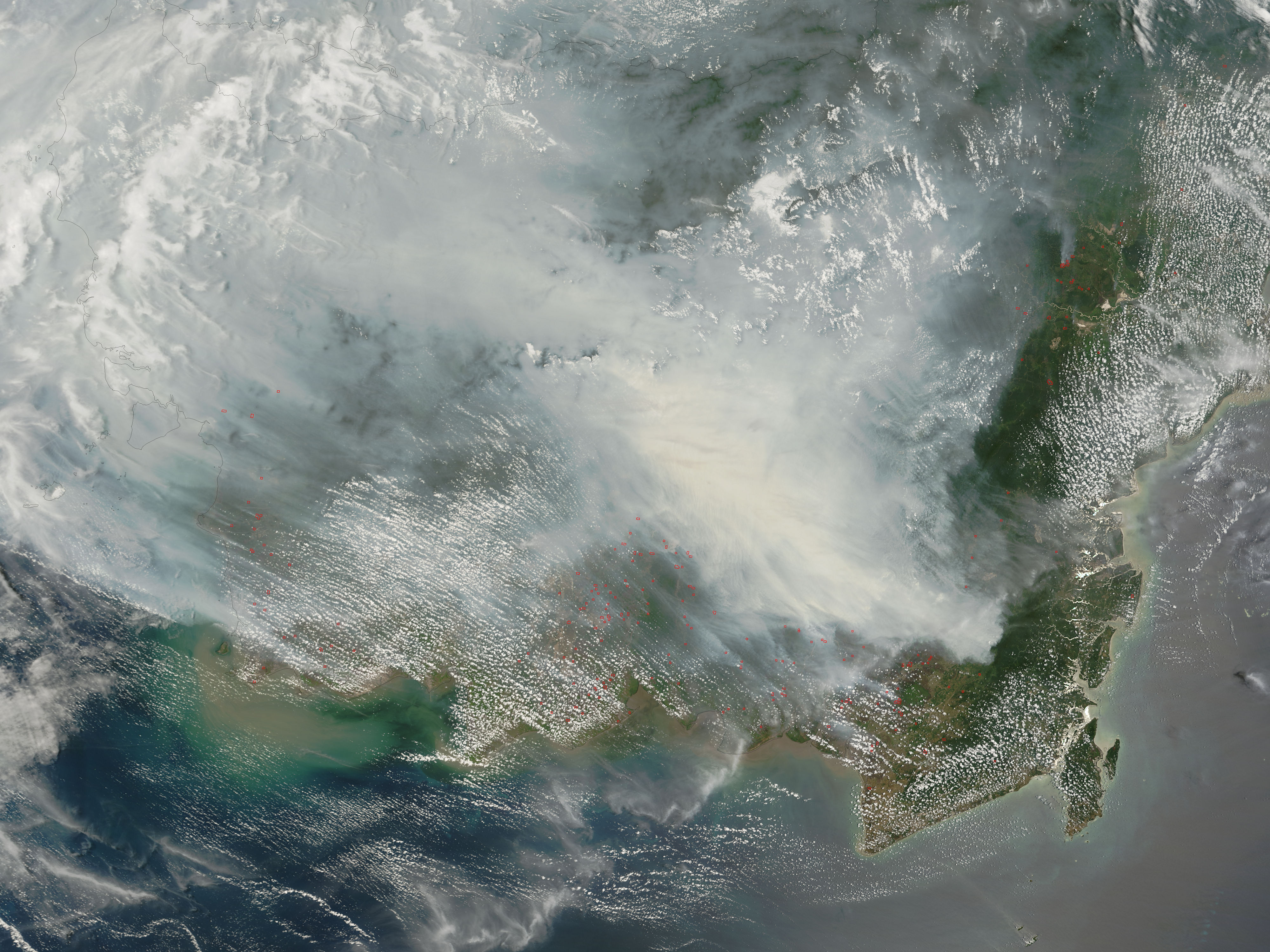
7. Nearly all Asean members are pissed off with Indonesia's annual haze;
8. Thailand is still seething over Singapore government investment arm Temasek Holdings' controversial deal with former Thai PM Thaksin Shinawatra's Shin Corp;
9. Indonesia and Malaysia have not fully embraced each other after another round of Konfrontasi;
10. Malaysia and Singapore can't even agree on a new overhead bridge to replace the old causeway to help improve the massive cross-border flow of goods and people, although Asean dreams about a region with free movement of goods, services, investment, skilled labour and freer flow of capital by 2015.

The Singapore charter is definitely a step in the right direction to set up a proper framework for the interaction of its ten family members.

But individual members of the Asean family must look at wider interests, not just their narrow self-interest.


Sophie's Note: Wikipedia
entry showing
satellite image of the 2006 Southeast Asian haze over Borneo.

Sunday, October 28, 2007

The devout tycoon

The latest installment of the Raffles Conversation in The Business Times features another Indonesian-Chinese tycoon. This time, it's Stephen Riady of the Lippo group in Indonesia and Singapore.

The piece, though colourful, is very sketchy about the problems faced by the group during the tumultuous years of the regional financial crisis a decade ago. One also doesn't get a good sense of the size of the family's empire and its long-term strategic business plans.

The devout tycoon

Stephen Riady, president of the Lippo conglomerate, talks to CHOW PENN NEE about why faith and business can mix, the prospects for real estate, and the group's future plans

A HUGE signboard for the Lippo development Newton One at the junction of Newton and Dunearn Road is emblazoned with the words 'Fully Sold, Thanks be to God'.

Stephen Riady, president of Indonesian conglomerate, the Lippo Group, is not afraid to wear his faith on his sleeve. Dotted around the island, his group's projects bear testament to his strong beliefs.

'Our development at Sentosa Cove is expected to have very good response too, when the results come out next month. For that one, I'm going to put up a signboard with the phrase 'Praise be to God', he says with delight, his arms gesturing animatedly.

Unapologetic about his enthusiasm for religion, Mr Riady says this is the best way to show one's faith. 'When you proclaim openly, you signify your commitment to Christianity. I become stronger after saying it and I feel I'm strengthening my faith,' says the 46-year-old Mr Riady. Ironically, he was the last in his family to convert - in 1992 as a 31-year-old - after his siblings and parents had taken the plunge.

Apparently, many staff of the Lippo group are also devout and have been fervently praying for the success of the group's projects. 'In fact, they were the ones who suggested I put a phrase thanking God for the developments being fully taken up,' reveals Mr Riady.

Whether or not through divine intervention, Lippo's prominence in the real estate space in Singapore has been growing. It had started snapping up properties on choice parcels of land long before the property-price frenzy took hold. 'When the Singapore government talked about the plans to remake Singapore, lots of people heard it,' he says. 'But we were the ones who believed in it, and took action early.'

Buying spree

This is the hallmark of a wise investor, he explains. 'If you see something that you believe in, that other people have not seen yet, will you just wait there? No. You get so excited you just go out to the market to find friends and brokers and see if there are opportunities.' Fortunately for him, at that time, there were few bidders and plenty of opportunities.

The group started its buying spree with Lippo's head office at Shenton Way at the end of 2004. It was subsequently sold for more than double the $151 million purchase price at $350 million earlier this year. Mr Riady said signs were becoming clearer in 2005 and 2006 that the Singapore economy was in good shape, with more investors streaming in. Then it was full steam ahead for the group, which chalked up a buy every month.

The Lippo name came to the fore with high profile buys from local banks United Overseas Bank (UOB) and OCBC - which had to divest some of their attractive properties in order to comply with regulatory requirements. 'Those were opportunities of a life-time, they were prime assets,' Mr Riady recalls.

Overseas Union Enterprise (OUE) - bought in a joint venture with Malaysian tycoon Ananda Krishnan from UOB - owns Meritus Mandarin hotel, the office building Overseas Union House, and the adjacent Change Alley Aerial Plaza. Lippo also bought retailer Robinsons from OCBC.

The tally in Singapore so far: nine residential developments, five commercial properties and two retail brands, with a total value of $4 billion. Collectively, these assets are a perfect fit for a group which had decided to focus primarily on real estate and retailing after the 1997 Asian financial crisis hit. Before that, its businesses ran the gamut of telecommunications, manufacturing, banking and other sectors.

Mr Riady - who has just been named Ernst & Young Strategic Investment Entrepreneur of the Year - is not about to slow down. He hopes to increase the value of the group's portfolio from US$7 billion in assets at present to US$20 billion within five years.

He does not think property prices here have reached their peak. 'I think not for the next four to five years,' he predicts. Ever the astute businessman, he's already looking for new opportunities. Right now, he's putting his money on properties that are almost completed.

'The developments that are going to be completed in six months to one year's time, there will be a lot of demand for them,' he says, pointing out that people who have sold their homes in en-bloc sales will need places to stay. There's also a dearth of soon-to-be completed projects.

His plan for his next few developments is to keep a few choice blocks for renting out. 'For the launch of Sentosa Cove next month, the plan is to sell half and then keep the other half and rent out,' he says, pointing to the booming demand for service apartments.

But what about the possible fallout from the US sub-prime mortgage crisis? It doesn't seem to faze him; there's still no problem borrowing from banks here, he says, and liquidity is abundant. 'I think the Asian market fundamentals are still strong, governments have accumulated huge foreign exchange reserves and companies in Asia have healthy balance sheets.'

To him, Asia and the US seem worlds apart. 'When I go to the US, people are talking about sub-prime,' he says. 'But in Asia, Hong Kong, China, Singapore, it's business as usual, people are still looking for opportunities to buy.' While transactions might slow in the next six to nine months, activity will return after that, he predicts.

Mr Riady's other core business, retail, is also humming along nicely. In the latest development, Lippo's Auric Pacific Group bought Delifrance - the chain of bakeries and cafes - from Prudential Asset Management Asia for $75.2 million earlier this month. Mr Riady said Delifrance is a 'good, strong brand' which would fit in with the food businesses Auric currently owns.

'Auric is involved in food manufacturing and distribution, but we would like to go direct into food retailing, straight to the consumers,' he said. Some of Auric's brands include Sunshine bread and SCS butter as well as a 29.9 per cent stake in Sesdaq-listed Food Junction Limited which operates a chain of food courts, Food Junction and Food Culture, in Singapore, Malaysia, Indonesia and China.

Delifrance's network of 230 outlets spanning Asia is a good way for Auric to distribute its other food products which do not have access to other markets outside Singapore, Mr Riady explained. 'We can sell SCS butter to Delifrance outlets in Hong Kong, for example, therefore using these overseas outlets to distribute our other food products,' he said.

In terms of clothing and department stores, his vision for the group's retail business is not just confined to Singapore but takes in the whole region, encompassing Indonesia, Hong Kong, China and Thailand. Growth for his retail business will be both organic and via acquisitions.

In China the group wants to grow organically, under the brand name Robbinz. 'We have started from scratch, with two stores in Guangdong. Two more will be opened in Tianjin and Chengdu, with the Tianjin store spanning one million sq ft - the largest single department store in the whole of China.'

'In the next three to five years, we plan to grow retailing from the present turnover of US$2 billion to US$5 billion for whole group.'

China is an important market for the group, but in the next 30-40 years. 'If we want to become the top businessmen in the world, Singapore is a little small, and we cannot ignore China,' says Mr Riady.

He plans to use Shanghai, rather than Hong Kong, as the base for Lippo's China operations in the future. 'If you want to be serious about the country, we have to be in that place, rather than operate from another territory,' he says.

Meanwhile, closer to home, Mr. Riady is determined to shrug off the bad press arising from the ousting of long-time Robinson directors in November last year.

'That episode was unexpected and I feel regretful over what has happened,' he says. But he is resolute in not letting the saga overshadow his plans for the department store. 'That was in the past. We now have better relationships with the current directors. Time will tell if I'm right or wrong. Let's see the results of Robinsons over the next few years.'

As president of Lippo group, Mr. Riady's ambit spans Singapore (where he is now based) plus Hong Kong and China. His attachment to Singapore goes way back; he studied here from the age of 10. In the years ahead, he sees Singapore becoming increasingly important for the group, which has shifted its head office here from Hong Kong. 'We want to make Singapore the regional office, outside Indonesia,' he says.

'The government here has good and far-sighted vision,' he adds. 'Its plan to remake Singapore into a completely different city is very positive for the market. That gives us a lot of confidence.'

In fact, the group will be raising up to $587.4 million with the planned listing in Singapore of a real estate investment trust (Reit) based on its retail properties in Indonesia. The Lippo-Mapletree Indonesia Retail Trust (LMIR) will offer 645.5 million units at 78 to 91 cents a unit, according to the trust's preliminary prospectus which has been lodged with the Monetary Authority of Singapore earlier this week.

Having made his first million in stock market investing while he was still studying for a finance degree at the University of Southern California, Mr. Riady was already subsumed into the family business - set up by his father Dr Mochtar Riady - two years before graduation.

He has since gone from working in various departments to heading the group's business in Singapore and Hong Kong. His brother James takes charge of the Indonesian business. Given his success, it is surprising to hear him say, not without a tinge of regret, 'actually if I had a choice I would have done something else, be a doctor or engineer'.

'My dad didn't say that I had to join the business, but in the early days, you already have the business, so somehow in university you just naturally major in business. You don't think about it.' Every school holiday would see him go back to Jakarta to work in different departments in the group's banking business.

Mr Riady doesn't want to impose the same routine on his children. 'The next generation, let them go, let them choose what they like,' he says amiably. What about succession? It's too early to say who will take over the business, he replies. For now, he is letting his children pursue what they want. Two of them are studying in his alma mater, while the third is 16 years old and studying at the Singapore American School

'It's important that we tell them they don't have to be in the family business. You see many people follow something that is not in their interest. Halfway through, they say that this is not what they want.' He relates how he meets friends of his children and they ask him for advice on a career 'that gives the most money and fame quickly'. But that may not be where their talents or interests lie, he says. 'It's important that you see what areas you like and can serve best. If you can serve it well, then the money will follow.'

Mr Riady's Christian faith has helped inspire his philanthropy. Like most businessmen, making money, friends, entertainment, were top of the list. 'Even family was ranked number 3 or 4, so God was nowhere on this list,' he says. That changed 15 years ago.

Joy of giving

'I have become less self-centred since becoming a Christian. The joy and satisfaction is much greater when you give. He relates his first act of giving, when he was still working in Hong Kong, where he attended a camp organised by a Christian organisation to help recovering drug addicts. 'They only asked for US$3,000 from me, and of course I helped. There was no unwillingness or burden at all on my part, since it was only US$3,000.'

A few months later, they invited him to their Christmas party, and the people who attended the camp were all wearing new T-shirts. 'A few hundred people were able to wear new T-shirts because of my gift. I had never experienced that before.'

Today, the Lippo group gives to a variety of causes, particularly education and religion.

It donated $21 million to NUS Business School in the form of $15 million to support the Mochtar Riady Building, and $6 million to create two distinguished professorships. The group gives to various churches and schools in Indonesia, Hong Kong, China, and Vietnam. 'We set aside millions each year,' he says proudly. 'And every year it is increasing.

Thursday, May 17, 2007

Vanishing islands

A couple of days ago Reuters carried an interesting report that Indonesia has so many islands it has not been able to count them all and is having a hard time finding names for them.

Officially there are about 17,000 islands, but the report said that number may drop as one minister fears hundreds of islands might vanish because of rising sea levels from global warming.

The report said the issue has become a hot topic after Indonesia upset neighbouring Singapore recently by banning sand exports to the city state, blaming sand mining for literally wiping some of its islands off the map.

Another way to capitalise on the problem is to sell some of the islands, most of which are uninhabited any way. Land-scarce but cash-rich Singapore will almost definitely be a keen buyer if Indonesian nationalism doesn't get into the way. Of course, most Indonesians will object to such a proposition due to nationalist sentiments.

But Indonesia should have sold some of the less strategic islands at the height of the regional financial crisis, instead of turning to the International Monetary Fund for help. The IMF bailout probably cost more to national pride than the loss of a few atolls.

Tuesday, April 24, 2007

Updated: Brothers again?

Singapore is suddenly back on good terms with its two immediate neighbours -- Indonesia and Malaysia.

The Straits Times ran a page one story today on Singapore striking a deal with Indonesia to resolve the protracted extradition treaty. The paper also ran a picture of Singapore Foreign Minister George Yeo (back to camera in the ST pix) hugging his Indonesian counterpart Hassan Wirajuda after the agreement was announced.

The signing of the extradition and defence pacts will take place in the Indonesian island of Bali. Singapore PM Lee Hsien Loong and Indonesian President Susilo Bambang Yudhoyono will witness the actual signing of the agreements.

This will definitely come as a relief to the two countries after two long years of negotiation. But details of the two agreements have not been disclosed yet.

ST said Indonesia has said previously that an extradition pact is crucial in its fight against corruption and would pave the way for going after Indonesians allegedly involved in graft cases who fled the country. The Defence Cooperation Agreement was proposed to restore defence cooperation after Indonesia froze the use of a joint military training area in 2003.

And there are signs of warming ties between Singapore and Malaysia. Hsien Loong and several ministers will visit Malaysia next month. Earlier this month, the National University of Singapore awarded an honorary doctorate to the Sultan of Johor.

Is the rapprochement real and lasting? Will it translate into real balance of benefits for Singapore and its two close neighbours? Can Singapore also resume strong ties with Thailand following the Shin-Temasek debacle? Will Singapore resolve its myriad outstanding bilateral problems, especially with Malaysia?

Will big brothers Indonesia and Malaysia finally resume the sale of sand to Singapore?


Update (17 November 2007): The proposed extradition and defence pacts between Indonesia and Singapore have since been unraveled.

Saturday, April 21, 2007

Consummate trader

An interesting profile of a well-known businessman in Singapore under Raffles Conversation in Singapore's Business Times. Peter Kwee seems to be quite adept in trading car businesses, thanks probably to his first job as a trader in flour and and plastics in Indonesia when he was 18.

Business Times - 21 Apr 2007
For the love of cars and golf
The two passions of Group Exklusiv chairman Peter Kwee are also his money-making ventures, reports CONRAD RAJ

NOTHING brings out the passion, or even the ire, in Peter Kwee, executive chairman of car seller Group Exklusiv, than the subject of Volkswagen. This normally mild-mannered man breathes fire when the subject of Germany's largest vehicle maker is raised or even when the name is mentioned.

'He is trying hard to get it off his chest,' says his son Kevin.

After eight years, his partnership with Volkswagen, which began in 1999, broke up after the German manufacturer changed its business model and decided to import its vehicles for the Singapore market directly. Mr Kwee's Cars & Cars, part of Group Exklusiv, then became a mere dealer, one of several.

As a result margins eroded - to Mr Kwee they were little more than paper thin. 'The margins were in importing and distributorship, but we were left out of the most lucrative part,' he says with more than a hint of anger.

'All that hard work in raising the profile of the brand just came to nought,' he notes. 'Prior to Cars & Cars taking over the Volkswagen distributorship, the brand was selling fewer than 160 cars annually. In our first year we sold over 500 cars, despite the fact that although we took over the dealership in January 1999 we could only start selling the cars in the middle of the year.'

In the following years Cars & Cars sold between 750 and 1,000 cars. Things were going so well that Mr Kwee decided to invest $24 million in a brand-new showroom in Alexandra Road, which opened in 2004.

Before Cars & Cars, Volkswagen vehicles were sold first by Auto GTI and then Inchcape.

The relationship between Mr Kwee and Volkswagen began to sour about two years ago when a new set of German-led managers under managing director Olaf Duebal took charge of the Singapore office.

Recently Volkswagen decided to go into the retail business itself. While Volkswagen claims most of the issues with Cars & Cars have been settled, Mr Kwee claims there are still some matters outstanding.

Although Mr Kwee is passionate about cars, he started his working life as a trader.

Born in the hill resort town of Bandung on the island of Java, Indonesia, in 1947 of parents who came from Fujian, South China, Mr Kwee started a trading business in flour and plastics when he was 18.

The venture was fairly successful, with Mr Kwee importing 50 to 100 truckloads of flour and 200 to 300 tonnes of plastic on each shipment.

'I had no choice but to forgo further studies as I was the eldest of 11 children - eight sisters and three brothers,' he said. 'The need to make money became more urgent after my father passed away in 1966.'

He then joined his brother-in-law to move into textiles. But the partnership was short-lived and he branched out on his own, travelling extensively to Taiwan and Japan to bring in the textile machinery to Indonesia to sell to the mills that were starting out then in the country.

Then came the anti-Chinese demonstrations and riots in Indonesia in the mid-70s. Fearing for the safety of his family, he decided to move to Singapore. By 1978, the entire family - comprising himself, his wife, son Kevin and daughter Karen - arrived in Singapore. 'I have always felt that Singapore was a better place to bring up your family as it has a solid government and the streets are safe,' he says. 'The education here was also better. It's among the three best cities to live in. The others being Vancouver in Canada and Perth in Western Australia.'

But Mr Kwee still retains a trading business in Indonesia.

However, being unfamiliar with the business environment, his initial Singapore investment was in property. He bought a 45,000 sq ft piece of land in Nassim Road from the Cheng family of Wing Tai Holdings. Today his land holdings amount to some 200,000 sq ft, amost all in or around Nassim Road, Dalvey Estate and Ridley Park.

'Property, as the old saying goes, is all about location, location and location,' Mr Kwee, who lives in Tanglin Hill, says. With property prices hitting the roof and a recent transaction in the area fetching over $950 per sq ft, a conservative estimate of $750 a sq ft will place his property fortune alone at $150 million.

'By coincidence, the Renault distributorship then was up for grabs and I decided to go for it,' he recalled. He teamed up with the distributor of the sports car Porsche (which by the way is the major shareholder of Volkswagen) to take over the Renault marque.

But the partnership soon split and Mr Kwee went on to take over the distributorship of Renault himself. The Porsche distributorship went to Karsono Kwee, another Indonesian but no relation to Peter. 'In fact Karsono was a customer of mine,' Mr Kwee said.

'When we took over Renault, the brand sold only 50 cars a year. Although we lost money in the first seven years, we were able to grow the brand to over 2,000 cars a year,' Mr Kwee said proudly, adding that no one else in Asia sells that many Renault cars.

Then after 25 years Mr Kwee decided to sell the distributorship to Wearnes International, which also sells Jaguars and Bentleys. 'The manufacturers were setting impossible targets, but still the parting was on amicable terms,' he noted, contrasting it with his split with Volkswagen.

Despite losing his two main distributorships, Mr Kwee remains very much in the car business. He continues to sell Skoda cars, which are built by the Czech subsidiary of Volkswagen.

'For our Skoda business, we have found a niche market in the taxi segment. We have negotiated and sold more than 300 Skodas to taxi operators. And we have a contract to put more than 1,000 Skoda taxis on the road every year.'

While Mr Kwee is not saying anything, somehow one gets the feeling that right at the back of mind there is some fear that he might lose the Skoda franchise too. That is perhaps one reason that he is now an avid fan of China-manufactured cars. So now he wants to be the king of China-made cars in Singapore.

To those still wondering why he gave up Volkswagen and Renault for China-made cars Mr Kwee comes up with some observations and a few interesting statistics: 'The European market has been quite stagnant here for over 10 years. Market share has been hovering around 10-15 per cent.

'Do you know that the two Korean brands here sell more cars than the over 25 European brands in Singapore? Between January and September last year, there were 11,800 Korean cars sold here. In that same time period, 9,200 European cars were sold, shared between 25 brands.

'The figures are clear for all to see. Consumers are looking for competitively priced cars. That is why, some six years ago, we started looking to bring in reasonably priced, reliable Chinese cars to Singapore.

'Since we started with Geely in November, we have collected more than 300 orders. Not bad for a new brand with only a single model. But not only are we going to bring in more Geely models, including an automatic version, but also other Chinese brands. Geely is only the beginning.'

Mr Kwee hopes to sell between 1,500 and 2,000 Geelys within a couple of years. Despite being cheap, the Geelys come with a three-year warranty and have met all the tests, even impressing members of the Land Transport Authority here who have visited the manufacturing plant in China.

Together with Skoda and two other Chinese brands, Dung Fung and Soyat, that Exklusiv plans to introduce to the market here soon, Mr Kwee hopes to sell around a total of 3,000 cars this year.

Since 1990, Mr Kwee has ventured into the leisure business. 'It's fortunate that I'm in the two businesses that I'm passionate about - cars and golf. I believe that in life, you should do something you like in order to succeed. For me, I love cars, that is why I went into the car business. Then I discovered golf. I see greenery and open space on the fairways and I forget my worries. Work solutions come up unexpectedly in the midst of a game,' he says.

His enthusiasm for cars has led him to accumulate a fleet of more than 20, including a couple of Bentleys, a Lamborghini, a Ferrari and a Jaguar. Although he is a tycoon worth at least $250 million, Mr Kwee prefers being at the wheel to being chauffeured around by his driver.

He says: 'We at Group Exklusiv are always looking for new opportunities in cars and in our leisure business. We are well known in Singapore for being in the car business for a long time now. Many are less aware that we are also serious players in the lifestyle and golf business.'

The leisure business began in 1990 with a golfing trip to Perth where Mr Kwee was persuaded to take an initial 24.5 per cent stake in Joondalup Country Club. Today with other partners selling out, he and Singaporean TK Low each own 49 per cent of the club.

Ten years later he and Mr Low bought the Meadow Springs Golf & Country Club, also in Perth. Both are favourites with Singapore golfers going to Perth, many of whom have also bought residences in Joondalup developed by the club.

In 2001, Mr Kwee bought over the Laguna National Golf & Country Club from NatSteel for a reported $100 million, including absorbing the club's considerable debts. NatSteel had invested some $230 million in developing the club. Despite recent problems with NatSteel over some payments, Mr Kwee claims that Laguna with its 3,000 members is profitable. Members also have reciprocal rights with Mr Kwee's clubs in Western Australia.

He also assures me that The Pines, formerly the Pinetree Town & Country Club in Stevens Road, which was purchased soon after Laguna for over $100 million, has started turning around. That purchase and its one-time dwindling membership - from a peak of 4,700 members to just over 1,400 - and some subsequent sale of a couple of properties led to some speculation that he was in some kind of financial bind. But he dismissed the rumours, pointing out that his debts were less than a third of the worth of his properties, which have continued to rise in value.

He also thinks that building a hotel on the club site for members and their guests will help with the cash flow. Both Laguna and The Pines are seen as long-term investments, but then as any businessman will tell you, 'everything has its price'. But for the present Mr Kwee says he intends to buy even more clubs to provide members with better value.

He also notes that more and more world-class sports events are taking place in Singapore and the region. 'The Singapore Masters is not the only world-class sporting event here. We have the Lexus Ladies PGA also played at Laguna, and there are ongoing talks to bring in A1 and F1 races. The world's spotlight is on Singapore. We are building our reputation as a world class sporting and leisure destination. The plans that we at Group Exklusiv have, for our lifestyle business, will focus on building this reputation.'

As to how he runs things, he says: 'In business you have to have perseverance and stamina and you must be focused. Nothing comes instantly. High profits come with high risk. One must therefore not be too greedy.'

The man has also had his share of failures, including the Old Melbourne Club, which had to be sold off at a 'big loss'. However, his biggest failure resulted 'from trusting people too much'. His faith in a couple of 'friends' who persuaded him to invest in several projects led to a loss of more than $20 million. 'How to consider them friends?'

As to taking his company public, Mr Kwee says: 'Not for the time being. Anyway it's too much of a hassle and I have to deal with too many shareholders.' Perhaps this comes from his experience in sometimes having to deal with disgruntled club members.

However, at 60 Mr Kwee is now beginning to feel the strain of his hectic life. So he has begun to pass on more responsibilities to his son Kevin, 37, and his daughter Karen, 35, to run an empire with a turnover of over $300 million and more than 600 employees.

Both his children have recently become parents themselves - and guess who dotes on their kids?

'Besides my golf, me and my wife now spend more time with our grandchildren. We love bringing them around,' Mr Kwee says like any proud grandparent.

Thursday, April 05, 2007

Updated: Blood Sand?

Minister for Foreign Affairs George Yeo calling on State Peace and Development Council (SPDC) Secretary-1 Lieutenant-General (LG) Thein Sein in Nay Pyi Taw on 3 April 2007.
(Pix source: Singapore's Ministry of Foreign Affairs)

Singapore is truly pragmatic in its foreign policy. The Straits Times on April 3 played up the story that Myanmar is offering to be a long-term supplier of sand and other key building materials to Singapore.

But what has not been analysed is the expected balance of benefits in such a deal with a rogue state like Myanmar. Sand is no basic commodity in Singapore. Singapore needs plenty of land sand for its construction sector and an equally substantial amount of sea sand for its on-going land reclamation works to enlarge the physical island. But it is in short supply in Singapore following the ban on the sale of land and sea sand to Singapore by traditional suppliers Malaysia and Indonesia in the last decade. Please see earlier postings.

Therefore, Singapore is likely to take up the Myanmar offer, which is likely to come at a premium. It's probably a done deal. Diplomats don't make such announcements unless they are quite certain of the outcome.

What will Myanmar want in return? According to the Singapore MFA statement, Lieutenant-General Thein Sein, First Secretary of Myanmar's ruling State Peace and Development Council, "encouraged" more Singapore companies to invest in Myanmar.

We can definitely expect some big Singapore investments flowing to Myanmar as part of the quid pro quo with the junta regime. What is conspicuously absent in the short news report is Myanmar's status as a pariah state and the political implications of the sand deal. Singapore Patriot has mentioned some of the things I wanted to say.

Will the Myanmar sand deal be awkward for Asean? The deal with Myanmar is also coming at a time when Singapore will assume the Asean chairmanship in August this year. The grouping still can't agree on a right approach to deal with junta regime, which has hijacked democracy and refused to free iconic leader Aung San Suu Kyi.

Is Singapore acting purely on its self interest, or will it be enlightened enough to use the opportunity to convince the Myanmar generals to release Aung with promises of a balance of benefits?

If successful, Singapore will earn plenty of brownie points in the international arena. It would achieve what former Malaysian Prime Minister Dr Mahathir Mohamad and others failed to accomplish.

Wednesday, March 07, 2007

Konfrontasi Again

While Singapore is sorting out its problems in the region, its two immediate neighbours -- Indonesia and Malaysia -- are having bigger headaches.

They have yet to fully resolve the competing claims over an oil-rich area off Borneo and were almost on the brink of a war.

According to The Straits Times this week, the Indonesian Parliament has called for a tough line on reported Malaysian military incursions, with two MPs saying Malaysians on the wrong side of a disputed border should be shot. This is definitely an escalation of earlier rhetoric.

'Once in a while we need to shoot them,' said Mr Soeripto, a member of the parliamentary commission on defence and foreign affairs at a hearing with Defence Minister Juwono Sudarsono and armed forces chiefs at the House of Representatives yesterday.

'Don't be afraid if something escalates from the shooting. We have four million volunteers who are prepared to die,' he was quoted as saying by news portal Detikcom.

The meeting was called to discuss the latest flare up in the border spat with Malaysia over the disputed oil-rich region which the Indonesians call Ambalat, in the sea off Borneo.

He said that he deployed warships to drive the intruders out, but added that the Malaysian navy also entered Indonesian waters around Ambalat 35 times last year.

The dispute over Ambalat took a turn for the worse two years ago, when Malaysia's state oil company Petronas awarded an oil concession to a subsidiary of oil giant Shell in an area where Indonesia had been granting oil concessions.

There was a standoff in the disputed area a month later, almost pushing both sides to the brink of war but tensions eased after they agreed to settle the dispute diplomatically.

We can definitely see Konfrontasi all over again should Indonesia lose its claim over Ambalat. Indonesia is still seething over the loss of two tiny islands near Ambalat in the Celebes Sea -- Sipadan and Ligitan -- to Malaysia in a legal battle in 2002.

No wonder Indonesia is so protective of its territory and its sand although it has over 17,000 islands.

PS: The Malaysia-Indonesia border dispute had translated into cyber warfare, according to this interesting article. The Indonesian phrase "Ganyang Malaysia" or "Crush Malaysia" -- used during Indonesia's resistance towards the creation of Malaysia in the 1960s -- had been used to deface some Malaysian websites. So far, there's no known instance of "Ganyang Singapura" in Singapore cyberspace.

Saturday, March 03, 2007

Trade Sanction on Little Red Dot?

Relationship between Singapore and Indonesia has definitely taken a turn for the worse.

First, Indonesia has banned the sale of land sand to Singapore. Second, Indonesia has disrupted the supply of granite to Singapore. The two ingredients are crucial to Singapore's booming construction sector.

Is Indonesia effectively imposing a selective trade sanction on Singapore due to its unhappiness with the little red dot? The answer seems to be yes, without judging the merits of the two countries' cases due to lack of information.

A major thorn in the bilateral relationship is their inability to sign a protracted extradition treaty that may have a big impact on Singapore should it favour Indonesia.

According to earlier reports, Indonesia has been pushing for such a treaty with Singapore in a bid to nab what it regards as criminal fugitives. But Singapore finds it difficult to accede, according to CNA.

What's next? A total ban on trade and the flow of Indonesian capital to Singapore?

Such a scenario is extremely unlikely and is difficult to implement. But any disruption on the flow of Indonesian trade and capital to Singapore could have a crippling effect on the little red dot.

Indonesia is Singapore's sixth largest trading partner with bilateral trade exceeding $30 billion, according to data disclosed in 2004 -- the first time in three decades -- following the end of the Malaysia-Indonesia Konfrontasi in the 1960s.

Indonesians are also the single biggest group of foreign buyers of private homes in Singapore. Many rich Indonesian businessmen obviously see Singapore as a safe haven for their capital.

Singapore will therefore do its level best to safeguard its safe haven status.

Saturday, February 10, 2007

NewSand?

There is finally a hint that Singapore, which is starved of many natural resources, may have found a solution to overcome the sand ban by its two closest neighbours.

There is a brief mention of the so-called NewSand today in a column in the pro-government The Straits Times, which analyses the current bad blood between Singapore and its neighbours:

After all, just look at how the Republic responded to the relentless Malaysian threats to curb its water supply. It came up with Newater, which some mocked or scoffed at initially, but which is now a multi-million-dollar industry, with Singapore's know-how now sought after from Australia to the Middle East.

Perhaps next will come NewSand, a synthetic equivalent which some are already talking about as the next adversity-turned-to-advantage answer to a shortage, not just in Singapore but elsewhere too, such as in China with its can't-get-enough construction boom.

Is it said in jest? Or is there really a substitute to the crucial building block of many societies? Will there be revelation of NewSand when the Singapore Parliament sits on Monday? Four MPs will ask questions on the implications of Indonesia's decision to ban sand exports last month, according to ST today. Singapore was the biggest buyer of Indonesian sand.

Whatever the real situation or solution, a line will clearly be drawn in the sand.

Thursday, January 25, 2007

Hiccup in Singapore-Brunei Ties?

Could Singapore be having problems with Brunei -- one of its best friends -- in the midst of its stand-offs with three other bigger neighbours?

In an odd development on Wednesday, Singapore's state-controlled port operator PSA International said it was returning the operations of the Muara Container Terminal in Brunei to the local government prematurely. PSA had only managed the greenfield port in Brunei for six years although the contract was supposed to run for 25 years until 2025. The ostensible reason by PSA was the achievement of its goals and Brunei's on-going review of Muara's longer-term capacity needs.

But it sounds more like a clash of the vision for the port industry in Brunei although PSA had worded the statement nicely. The possible clash could be partly explained by a report that said Brunei's Economic Development Board had identified a nearby island called Pulau Muara Besar in 2002 for another new terminal.

Whatever the real reason for the parting of ways, the development has great political significance as the two countries have very strong and deep-rooted ties.

Brunei is the only country in the world that has its currency pegged to the Singapore dollar. Their currencies are interchangeable. Even the Malaysian currency is no longer interchangeable with the mighty Singapore dollar since the two countries separated in 1965.

In fact, Singapore and Brunei had agreed to join the formation of Malaysia in the 1960s. But Brunei dropped the idea following an internal revolt, while Lee Kuan Yew's Singapore was booted out of the federation by the Malaysian administration of Tunku Abdul Rahman after a brief merger of two years.

Since then, the two small former British colonies have forged very close political and economic ties. They enjoy deep-rooted military and bilateral ties although they are often downplayed. The Sultan of Brunei is known to have many assets in Singapore but the fact is never played up in Singapore.

With the deep ties, one would have expected political considerations to override any differences in the state port deal. In other words, one would have imagined that PSA would continue performing national service regardless of any commercial differences due to the paramount political considerations.

Despite the botched port deal, Singapore and Brunei are expected to continue their warm and friendly ties.

The same cannot be said about Singapore's current soured ties with Thailand, Malaysia and Indonesia.

Wednesday, January 24, 2007

Singapore Besieged

Changi Beach 1934
fairypoint

Singapore has probably never felt so besieged.

Indonesia is the latest neighbour to be cross with the tiny island nation after squabbles with Malaysia and Thailand.

Yesterday, Jakarta Post and other Indonesian papers reported the Indonesian government's decision to ban the sale of land sand, which effectively deprives Singapore the bulk of its sand needs for construction jobs. Singapore is the biggest user of Indonesian sand.

Price of land sand in Singapore will shoot up overnight although the Singapore government is set to release its stockpile of sand to help cap sand price. This is probably the first time that Singapore has publicly said it has a stockpile of sand to deal with contingency. With such meticulous long-term planning, it is not inconceivable that Singapore has massive stockpiles of other essential items like water, oil, gas, rice, sugar and many other seemingly mundane things in life.

Back to the Indonesian ban on sand. The Indonesian move is ostensibly due to environmental concerns but there is also a lingering feeling that it is payback time over the haze issue. The two countries had a diplomatic spat when Singapore raised the perennial Indonesian haze problem, which was driving away investors from the region, at the United Nation last October.

With the latest ban, Singapore won't be able to buy any sand -- land sand (used for concrete in building construction) and sea sand (used for reclamation works) -- from either Indonesia and Malaysia.

Former Malaysian premier Dr Mahathir Mohamad had banned the sale of all types of sand to Singapore during the crisis days in the 1990s. Singapore then turned to Indonesia for land sand as there was still a Indonesian ban on the sale of sea sand, which must be dredged from the seabed.

The Malaysian sand issue cropped up again during the failed talks between Singapore and Malaysia to jointly build a bridge to replace the causeway linking the two countries. As part of the deal, Singapore had wanted the right to buy Malaysian sand and use its airspace.

It was no go for Malaysia, which then scrapped the bridge project completely. The decision incensed Dr Mahathir, who felt that Malaysia had the right to build its half of the bridge, with or without Singapore's nod. He was also upset that Malaysia had even entertained the idea of selling sand to Singapore despite his earlier ban. The sand issue is just the tip of the iceberg in Malaysia-Singapore bilateral ties.

Of course, Singapore is still sorting out the mess in Thailand.