Showing posts sorted by relevance for query singapore sand. Sort by date Show all posts

Wednesday, January 24, 2007

Singapore Besieged

Changi Beach 1934
fairypoint

Singapore has probably never felt so besieged.

Indonesia is the latest neighbour to be cross with the tiny island nation after squabbles with Malaysia and Thailand.

Yesterday, Jakarta Post and other Indonesian papers reported the Indonesian government's decision to ban the sale of land sand, which effectively deprives Singapore the bulk of its sand needs for construction jobs. Singapore is the biggest user of Indonesian sand.

Price of land sand in Singapore will shoot up overnight although the Singapore government is set to release its stockpile of sand to help cap sand price. This is probably the first time that Singapore has publicly said it has a stockpile of sand to deal with contingency. With such meticulous long-term planning, it is not inconceivable that Singapore has massive stockpiles of other essential items like water, oil, gas, rice, sugar and many other seemingly mundane things in life.

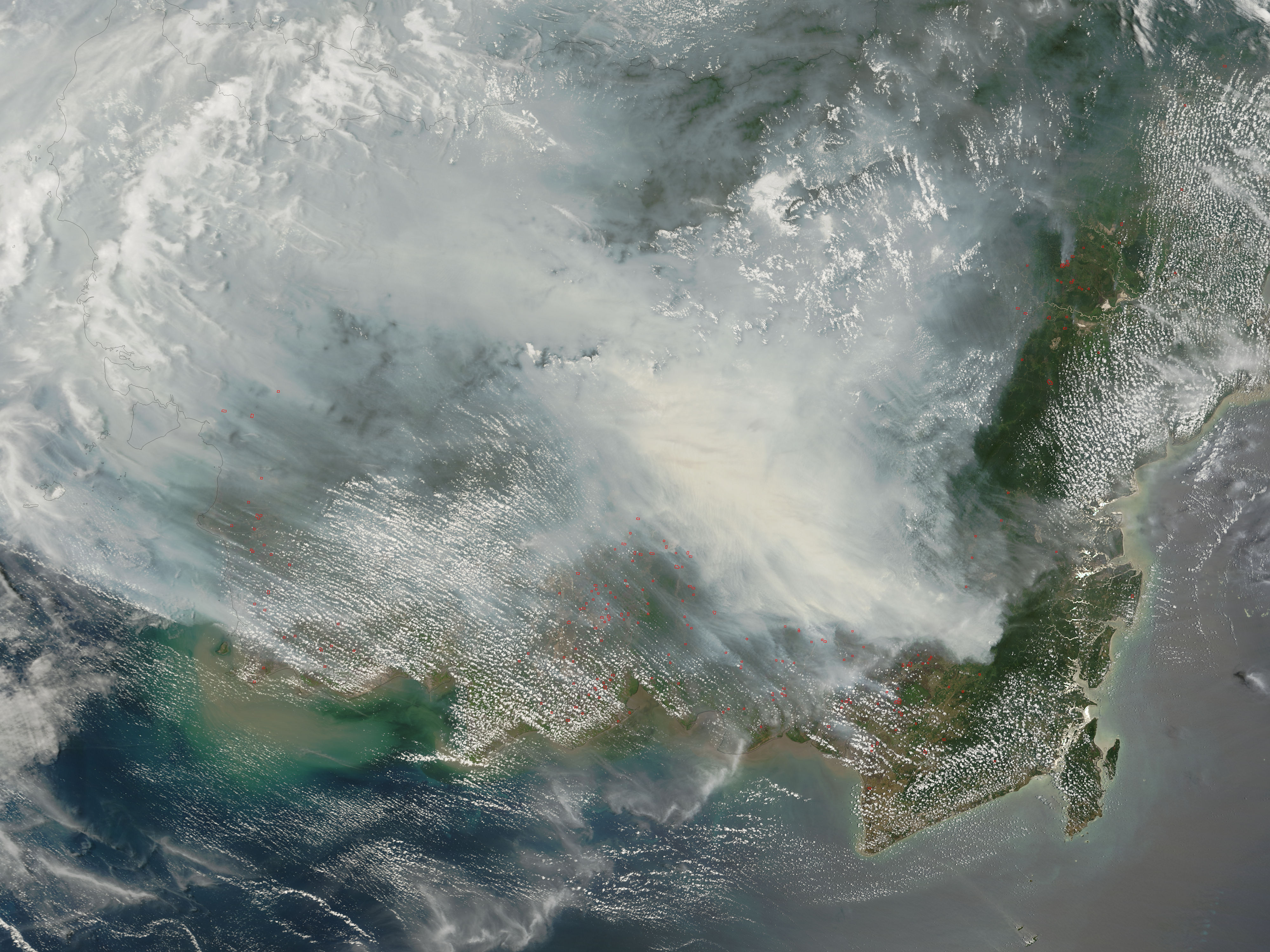
Back to the Indonesian ban on sand. The Indonesian move is ostensibly due to environmental concerns but there is also a lingering feeling that it is payback time over the haze issue. The two countries had a diplomatic spat when Singapore raised the perennial Indonesian haze problem, which was driving away investors from the region, at the United Nation last October.

With the latest ban, Singapore won't be able to buy any sand -- land sand (used for concrete in building construction) and sea sand (used for reclamation works) -- from either Indonesia and Malaysia.

Former Malaysian premier Dr Mahathir Mohamad had banned the sale of all types of sand to Singapore during the crisis days in the 1990s. Singapore then turned to Indonesia for land sand as there was still a Indonesian ban on the sale of sea sand, which must be dredged from the seabed.

The Malaysian sand issue cropped up again during the failed talks between Singapore and Malaysia to jointly build a bridge to replace the causeway linking the two countries. As part of the deal, Singapore had wanted the right to buy Malaysian sand and use its airspace.

It was no go for Malaysia, which then scrapped the bridge project completely. The decision incensed Dr Mahathir, who felt that Malaysia had the right to build its half of the bridge, with or without Singapore's nod. He was also upset that Malaysia had even entertained the idea of selling sand to Singapore despite his earlier ban. The sand issue is just the tip of the iceberg in Malaysia-Singapore bilateral ties.

Of course, Singapore is still sorting out the mess in Thailand.

Thursday, April 05, 2007

Updated: Blood Sand?

Minister for Foreign Affairs George Yeo calling on State Peace and Development Council (SPDC) Secretary-1 Lieutenant-General (LG) Thein Sein in Nay Pyi Taw on 3 April 2007.
(Pix source: Singapore's Ministry of Foreign Affairs)

Singapore is truly pragmatic in its foreign policy. The Straits Times on April 3 played up the story that Myanmar is offering to be a long-term supplier of sand and other key building materials to Singapore.

But what has not been analysed is the expected balance of benefits in such a deal with a rogue state like Myanmar. Sand is no basic commodity in Singapore. Singapore needs plenty of land sand for its construction sector and an equally substantial amount of sea sand for its on-going land reclamation works to enlarge the physical island. But it is in short supply in Singapore following the ban on the sale of land and sea sand to Singapore by traditional suppliers Malaysia and Indonesia in the last decade. Please see earlier postings.

Therefore, Singapore is likely to take up the Myanmar offer, which is likely to come at a premium. It's probably a done deal. Diplomats don't make such announcements unless they are quite certain of the outcome.

What will Myanmar want in return? According to the Singapore MFA statement, Lieutenant-General Thein Sein, First Secretary of Myanmar's ruling State Peace and Development Council, "encouraged" more Singapore companies to invest in Myanmar.

We can definitely expect some big Singapore investments flowing to Myanmar as part of the quid pro quo with the junta regime. What is conspicuously absent in the short news report is Myanmar's status as a pariah state and the political implications of the sand deal. Singapore Patriot has mentioned some of the things I wanted to say.

Will the Myanmar sand deal be awkward for Asean? The deal with Myanmar is also coming at a time when Singapore will assume the Asean chairmanship in August this year. The grouping still can't agree on a right approach to deal with junta regime, which has hijacked democracy and refused to free iconic leader Aung San Suu Kyi.

Is Singapore acting purely on its self interest, or will it be enlightened enough to use the opportunity to convince the Myanmar generals to release Aung with promises of a balance of benefits?

If successful, Singapore will earn plenty of brownie points in the international arena. It would achieve what former Malaysian Prime Minister Dr Mahathir Mohamad and others failed to accomplish.

Wednesday, January 31, 2007

Letter from Singapore

By Uncle Cheng


Singapore may not seem the most obvious place for Hong Kong people to choose for a holiday but that is where I found myself for family reasons last Christmas and new year. It was a revealing experience and I kept on making comparisons in my mind between Singapore and Hong Kong.

The first thing I learnt, and which becomes obvious in discussions with Singaporeans, is that Singapore is on the verge of an economic boom. After years of slow growth there is great optimism that new government policies are lifting both the economy and peoples’ spirits.

Property prices are rising markedly, foreign bankers are flooding in, huge public infrastructure projects are underway, and investment capital is streaming into local bank accounts from such local nations as Indonesia and even from distant Europe. Suddenly all the ingredients for economic growth are looking good.

One of my sources is a nephew of mine who is in a favourable position to know such things as his work keeps him in close touch with business and economic prospects in Singapore and the nearby region. I was especially interested to hear him explain how the government’s decision to reverse decades of anti-gambling policy and licence two super-casinos has transformed the economic horizon. It reminded me of how Macau’s economic fortunes were totally transformed by the decision to end the old casino monopoly and open the gambling market to virtually open competition.

One argument always used by people who oppose casinos is that they attract crime, triad activity and get poor people into financial difficulty. But as everyone knows the Singapore government has always prided itself on its low crime rate and its very tough treatment of all criminal behaviour. How, I wondered, will the government be able to square its anti-crime reputation with the new casinos. Well, as usual, Singapore has thought the issue through and announced a range of measures which it says will keep the casinos free of crime.

Yet despite its great wealth, efficient government and highly disciplined society Singapore’s miniscule size remains its greatest disadvantage. You cannot flex impressive muscles when you are a dwarf. The city state’s prosperity has to depend on the friendliness of its neighbours.

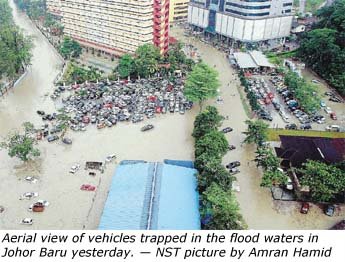
No neighbour is more crucial than Malaysia for it is from there that Singapore imports fresh water and daily foodstuffs, especially vegetables. It reminds me of Hong Kong’s dependence on the Mainland for the same things. Incidentally, the worst floods in the state of Johor for many years threaten large increases in Singapore vegetable prices through the lunar new year.

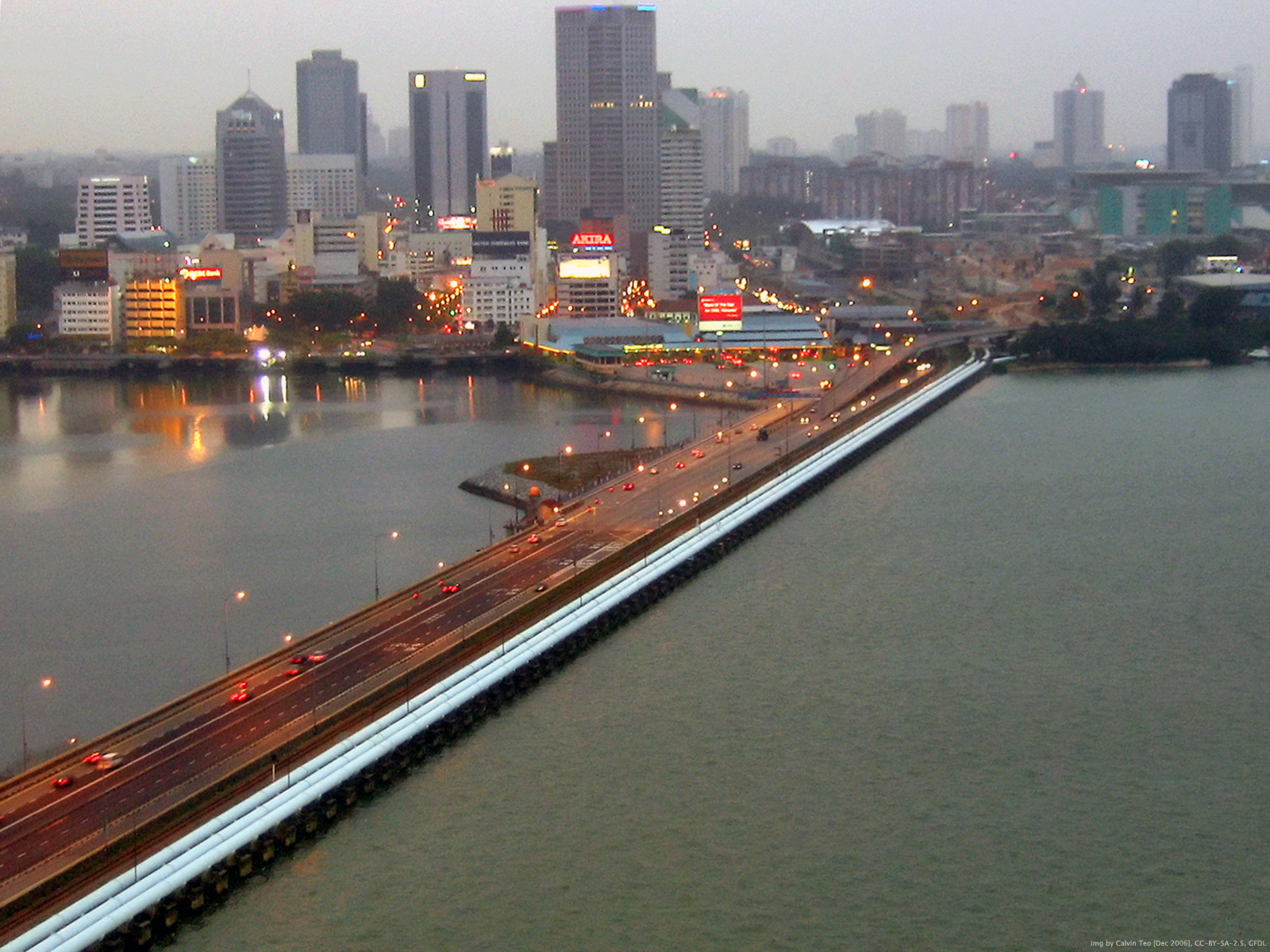
An irritating problem between Singapore and Malaysia has been the disagreement about a bridge to replace the existing solid earth Causeway. When no agreement could be reached about the proposed bridge which Malaysia favoured, the Malaysian government decided to spend millions on building new extravagant immigration facilities at its border. As Malaysia had made the case for an overhead bridge, which would have opened up the waterway to small shipping, Singapore hesitated and raised other issues such as the sale of sand and the use of Malaysian air space. Indeed the bridge became such a prickly issue that at one stage Malaysia came up with the bizarre suggestion that the bridge should be built without Singapore's approval. Presumably that would result in the bridge stopping in mid-air at the Singapore border!

Next week I will continue my look at Singapore and in particular I will make some comparisons between Hong Kong and Singapore — comparisons that, I regret to say, are not favourable to Hong Kong.

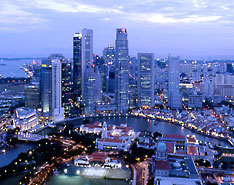
Sophie's note: Please see Singapore's marketing pitch for Marina Bay, the centrepiece of the Lion City.

Sunday, February 03, 2008

S'pore-KL budget flights take off but...

The long-protected Singapore-KL air route has finally been opened up, slightly.

Singapore and Malaysia newspapers highlighted the historic entry of budget airlines in the air sector between Singapore and Kuala Lumpur on Feb 1. Three new players -- Malaysia's AirAsia, and Tiger Airways and Jetstar Asia of Singapore -- will operate a total of four flights a day. Most of the flights will still be dominated by the expensive Singapore Airlines and Malaysia Airlines.

Sophie's World has long argued for the liberalisation of the route, which was dominated by the national carriers of Malaysia and Singapore for the past three decades. It just didn't make sense to shield the two national carriers from the new kids on the block since budget airlines came into play in 2003.

Passengers and commentators will continue to analyse the situation and applaud the move as another step towards open skies in Asean. Sophie's World fully endorses Asean's Open Sky pact by the end of this year to hasten economic and social integration of the region with over 500 million people -- more than one-third the population of China, which is the world's most populous country.

But an open sky pact alone will not nudge the region's disparate economies towards greater integration as long as many countries remain highly nationalistic.

In the case of closely-knit Malaysia and Singapore, the long-term solution is not more flights alone as many people still won't be able to travel freely. Why? This is because air travel is still relatively expensive due to the litany of taxes imposed, and the subsequent connection cost to the city.

For example, The Straits Times highlighted the family of 21 who collectively spent S$3,200 on the maiden budget flight from Singapore to KL. It's a lot cheaper than the S$8,800 they would have forked out on either Singapore Airlines or Malaysia Airlines for the same round-trip flight. At S$3,200, it works out to S$152 per person for a round-trip fare, including all the taxes.

The family could have chartered an entire van or bus for far less and used it to ferry them around in KL for one week. But bus was not an option for them as they said they had some toddlers who couldn't stomach the bus journey to KL. That's not the point here.

The point is at S$152 per person (some budget tickets were given away for free as part of the maiden flight promotions), it is still a high price to travel 320km from Singapore to KL. Budget airfare, inclusive of taxes and surcharges, is still at least 50 percent higher than what many luxury coaches charge between the two cities. In fact, ST said many people paid under S$200 each for a budget airline seat. This is more than double the return bus fare of S$92 charged by luxury coach Aeroline.

The long-term solution to facilitate the extremely high traffic volume between the two capitals is a high-speed bullet train service. It's an idea that was mooted by several Malaysian businessmen in the 1990s and revived recently by Francis Yeoh.

Even former Malaysian Prime Minister Dr Mahathir Mohamad had pushed for the idea as a way to further integrate the two countries. As part of the fast train service between KL and Singapore, Dr Mahathir had proposed a rail tunnel under the narrow Straits of Johor, which separates Malaysia and Singapore.

The rail tunnel project was part of the transportation blueprint in the southern Malaysian city of Johor Baru that involved building a new overhead bridge to replace the old causeway, which connects the two countries.

Although Singapore had officially welcomed the rail tunnel idea, negotiation to build a new overhead bridge was almost stillborn from the beginning. Malaysia finally called off the bridge project two years ago as Singapore had made certain demands -- the right to use Malaysia's airspace and buy sand for its land reclamation -- that Malaysia could not fulfill.

Francis Yeoh appears to be still keen to push ahead with the bullet train project although the rail tunnel and bridge components have been derailed. He could build a new fast rail link to Singapore should Malaysia secure Singapore's blessing, or end the rail track in the city of JB.

The answers are still hazy.

What is clearer is that a fast train service could zip from Singapore to the heart of KL in just 90 minutes -- half the time needed to drive on Malaysia's North-South Expressway. The point-to-point travel will be even faster than air travel due to time needed for airport immigration clearance, baggage clearance and the 57-km road or rail connection between the Kuala Lumpur International Airport and the capital.

Of course, demand will hinge on the eventual price of a train ticket. Sophie's World is hopeful that the price ticket for a fast train service, should it materialise, will be competitive compared to full-fledged airlines or even budget airlines.

But planners in Singapore and Malaysia must not ignore the ultimate bottleneck for road and rail travelers between the two countries -- the jointly-owned causeway.

Friday, September 07, 2007

Cleaning up Johor Straits good for S'pore too

Punggol, which is located on the northeastern part of Singapore, will be given a new lease of life. Singapore's Prime Minister Lee Hsien Loong said during his National Day Rally speech on Aug 19 that the masterplan for the area dubbed 'Punggol 21-plus' is 'back on track'.

'Punggol 21-plus' will boast features like a freshwater lake - and a waterway running through the estate with homes and a town centre built on both banks, according to ST. The north-eastern coastal suburb will also get recreational facilities like water sports, gardens and parks with jogging tracks and eateries for al-fresco dining.

It all sounds great, but Punggol and the rest of the northern part of Singapore will never be as vibrant as the southern region of Singapore. The southern region, which has always been the commercial hub of Singapore, is rapidly being transformed into a more fun place.

The southern part of Singapore will have two world-class integrated resorts with casinos within the next three years or so. The government has awarded the Marina Bay site to Las Vegas Sands, which is building also building the world's biggest casino in Macau, and the Sentosa site to Genting International.

That's not all in the Marina Bay area. The new downtown is taking shape and there will be world-class gardens, a giant fresh-water reservoir, and a huge ferris wheel. There will be plenty of activities around the clean and pristine Marina Bay once all the plans are in place.

While the southern part of Singapore is attracting all the big dollars and attention, the northern part of Singapore will continue to be relatively subdued despite the latest plan to rejuvenate Punggol.

As Singapore is small with 704 square kilometres in area, every inch of Singapore, including the northern part, will have to be spruced up eventually. But it won't be easy to rejuvenate the northern coastline.

For a start, water off the northern part of Singapore, which is bounded by a strip of water known as Straits of Johor, is very dirty. The straits is a narrow waterway separating Singapore and its close neighbour Malaysia.

The straits is almost like a giant cesspool that has not been flushed for more than 80 years. Why? This is partly because the causeway, which was built on reclaimed land and cuts across the straits to link the two countries, has been blocking the free flow of water in the straits since it was completed by the British in 1924.

Singapore has done its part to reduce further pollution to the straits, spending $7 billion to build massive tunnels to move sewage to two new waste treatment plants in Changi and Tuas, instead of discharging waste into the straits.

Malaysia is also trying to clean up the straits, although not as successful.

In 1996, former Malaysian Prime Minister Mahathir Mohamad proposed an overhead bridge to replace the ageing causeway in a bid to free up the flow of water in the straits. It is part of a grander plan to turn the southern Malaysian state into a transportation hub. The project would have allowed small ships and barges to traverse the straits.

The bridge project has not taken off after ten years, complicated by internal Malaysian politics and disagreements with the Singapore government. Last year, current Malaysian government led by Abdullah Ahmad Badawi, called off the bridge project. Malaysia could not strike a deal with Singapore, which wanted to buy sand and use Johor airspace as part of the quid pro quo to jointly build a new bridge.

The decision to abort the project incensed Dr Mahathir, who is still on a warpath with his successor despite bouts of heart attacks. The Malaysian statesman had early said he would stop his bickering if the bridge is built. He had continued to criticise the bridge issue as reported in malaysia-today.

The bridge project is expected to remain on the backburner for some time, as the two governments have not been able to resolve all their differences since the two countries separated in 1965.

With or without a new bridge to replace the causeway, Malaysia and the Johor state government must step up efforts to clean up the five dirty rivers flowing into the Johor Straits.

But it will be more ideal if a new overhead bridge could be built to replace the over-utilised causeway and allow water in the stagnant straits to circulate more freely.

A cleaner straits will be good for the long-term development of the coastal areas of both Singapore and southern Malaysia, which will have a new development zone called Iskandar Development Region.

A cleaner Johor Straits could also help make northern Singapore, including Punggol, a more thriving hub one day.

Wednesday, November 01, 2006

Johor's woes

The Malaysian state of Johor just can't get its act together.

According to New Straits Times today, an half-hour rain yesterday was enough to turn the Jalan Tampoi stretch at Kampung Ungku Mohsin into a river. This is just the tip of the iceberg on problems in the southern Malaysian state bordering the affluent Singapore.

The federal government has not been able to resolve two main problems plaguing Johor and Singapore -- the sale of Johor water to Singapore and the construction of a bridge to replace the dam-like causeway linking the two countries.

As a result of the inability of the two governments to come to terms on water pricing, Johor continues to sell raw water to Singapore at 3 Malaysian sen per thousand gallons until 2011 and 2061 under two agreements. Singapore sells back a small portion of treated water to Johor at subsidised rates.

And instead of trying to secure Singapore's blessing to jointly build a bridge, Malaysian PM Abdullah Ahmad Badawi called off the bridge project completely. The reason? Badawi's cabinet could not agree with Singapore's requests for the so-called "balance of benefits" -- the right to use Malaysian airspace and buy Malaysian sand for Singapore's reclamation purpose -- despite better bilateral relations after the departure of Malaysian premier Dr Mahathir Mohamad.

While Malaysia should have planned the bridge project better, Singapore's position is not so admirable either. This sentiment was well captured in famous Singapore A-level student Gayle Goh's blog, in which she basically criticised Singapore's selfishness in its foreign policy.

In particular, she also cited her school's dialogue session with Singapore's Permanent Secretary of the Ministry of Foreign Affairs Bilahari Kausikan, who was asked by a student as to why Singapore was unwilling to help to build the bridge between Malaysia and Singapore as a gesture of goodwill between neighbours. His reply: "You want to build a bridge? Sure. But make it worth my while."

Gayle's enlightened response to the episode:

This mentality of self-interest -- which, let's call a spade a spade, is really selfishness -- sounds well and good until we begin to consider a few things. Firstly, I'm quite concerned that Singapore's selfish tendencies may just come round to bite us in the behind at some point. Our reluctance to do anything about Burma means that ASEAN is weakened from within, and our reputation as a region tarnished overseas. Our small-mindedness about the matter of goodwill and ties between Malaysia is not only downright obnoxious, but spells out ill omens for diplomatic and trading ties between the nations in the future. And let's not even talk about what will happen when the water agreement expires. With regards to Iraq? Our insensitivity to our neighbours' needs and our willingness to 'suck up to the US', which he essentially conceded, is hardly going to endear ourselves to Islamic radicals in the region.

The two bilateral problems alone will remain unresolved for some time to come. As a result, Malaysia continues to lose out on water revenue. And without the integrated bridge and transportation hub blueprint, Johor will never be able to resolve all its traffic problems.

In the meantime, the state continues to be plagued by other problems -- crime, traffic snarl, corruption, poor city planning, a narrow channel of water with one of highest toxic levels in the world, highest inflation in the country due to massive inflow of the stronger Singapore dollar, and a whole colony of underground industries to cater to Singaporeans and others (DVD piracy and prostitution).

Saturday, March 03, 2007

Trade Sanction on Little Red Dot?

Relationship between Singapore and Indonesia has definitely taken a turn for the worse.

First, Indonesia has banned the sale of land sand to Singapore. Second, Indonesia has disrupted the supply of granite to Singapore. The two ingredients are crucial to Singapore's booming construction sector.

Is Indonesia effectively imposing a selective trade sanction on Singapore due to its unhappiness with the little red dot? The answer seems to be yes, without judging the merits of the two countries' cases due to lack of information.

A major thorn in the bilateral relationship is their inability to sign a protracted extradition treaty that may have a big impact on Singapore should it favour Indonesia.

According to earlier reports, Indonesia has been pushing for such a treaty with Singapore in a bid to nab what it regards as criminal fugitives. But Singapore finds it difficult to accede, according to CNA.

What's next? A total ban on trade and the flow of Indonesian capital to Singapore?

Such a scenario is extremely unlikely and is difficult to implement. But any disruption on the flow of Indonesian trade and capital to Singapore could have a crippling effect on the little red dot.

Indonesia is Singapore's sixth largest trading partner with bilateral trade exceeding $30 billion, according to data disclosed in 2004 -- the first time in three decades -- following the end of the Malaysia-Indonesia Konfrontasi in the 1960s.

Indonesians are also the single biggest group of foreign buyers of private homes in Singapore. Many rich Indonesian businessmen obviously see Singapore as a safe haven for their capital.

Singapore will therefore do its level best to safeguard its safe haven status.

Saturday, March 08, 2008

Guardian of Singapore's food supply

The Raffles Conversation series in Singapore's The Business Times today featured a Singapore government official, who is the 'guardian' of Singapore's food supply as aptly described in its headline.

The article mentioned the well-known fact of Singapore's move to diversify its food sources as a response to rising costs of food in the world.

"In response to the rising costs of food, the agency has been diversifying its food supply sources, such as chickens from Brazil, vegetables from Vietnam and Indonesia, frozen ducks from Taiwan and seafood from Namibia. With the exception of eggs, all the key food items in Singapore have less than 50 per cent of their supply coming from a single country," the article stated.

While it is not explicitly stated, the move is presumably a long-term attempt to reduce dependence on any country as a strategic move to safeguard its national interest. While it is not overtly stated, the move is probably also aimed at cutting dependence on food supply from Malaysia as its traditional source.

Why? Singapore knows the danger of being overly dependent on any country, especially its close neighbours Malaysia and Indonesia, for key supplies. We have seen it in the case of the water squabble with Malaysia and the ban of the sale of sand to Singapore by the two neighbours.

As a result of bilateral skirmishes with its two neighbours, Singapore has had to resort to some innovative measures to assert its independence and sovereignty.

In the case of water, Singapore started developing alternative water sources -- such as NEWater and enlarging its water catchment areas -- following their tiff over the renewal of the water contracts with Malaysia in the late 1990s. We also learnt that Singapore has been stockpiling sand on the island following the ban by Indonesia.

While it is good to reduce its dependence on any country, Singapore cannot cut its dependence on them completely. All countries are dependent on each other.

Today, Singapore is a lot richer than its neighbours. But fortunes can also change overnight.

Guardian of Singapore's food supply

As head of the Agri-Food & Veterinary Authority of Singapore, Chua Sin Bin has the monumental task of overseeing the Republic's sources of food, upholding food safety standards and safeguarding animal and plant health. CHEN HUIFEN reports


CEOs tend to be an impatient lot. Once they sit down to meet the press, they can't wait for the interview to start and be done with it, so that they can get on with the next engagement.

But not so Chua Sin Bin, 60, CEO of the Agri-Food & Veterinary Authority of Singapore, the key agency responsible for making sure that Singaporeans can enjoy their favourite foods with peace of mind and that the well-being of Singapore's plants and animals is being managed properly.

Before getting down to the formal part of our interview, Dr Chua spends a good half an hour sharing snippets of his personal life.

As his corporate communications assistant director prepares a cup of tea for the man, he speaks of his ambivalent attitude to the other hot drink associated with hospitality. 'I like the smell of coffee,' said Dr Chua. 'I always offer to make my wife coffee because I like the aroma, but I don't quite like the taste of it.'

Very soon, one learns that the man is a tea connoisseur and the former chairman of the Technical Committee for Tea, which was charged with setting the Singapore standard for teas, with a view to establish a tea auction centre here. 'But the auction centre never really took off,' he said with a wry laugh. 'So we wasted all our efforts.'

He knows his teas by type and origin, as well as the processes that go into their making. His favourite is Zhejiang's unfermented Longjing tea.

'It's the nicest of all,' said Dr Chua, who is also chief veterinary officer. 'Because it is green tea and hasn't gone to oven to dry. It's dried in the wok, by hand. So you can see the gentle treatment which the tea leaves have been given. The heat is not hot enough to burn your hand, so it is a very tedious process. As for Japanese tea, it tends to have a little bit of a burnt taste. So I always go for Longjing.'

Perhaps his youthful complexion has something to do with his tea drinking habit. Or his eating preferences. He proclaims that he is not adventurous when it comes to food, and will avoid anything with MSG or raw ingredients such as sashimi. 'My wife hardly fries,' he added. 'Most of the foods we eat at home, I think, are blanched.'

Spotlight on AVA


It is hard to pinpoint whether such habits are driven by health reasons or simply an extension of his professional undertaking. After all, food safety is part of his responsibility. And with food scares, import bans and rising food prices headlining the news recently, the spotlight has been cast on AVA to come up with measures and solutions.

In response to the rising costs of food, the agency has been diversifying its food supply sources, such as chickens from Brazil, vegetables from Vietnam and Indonesia, frozen ducks from Taiwan and seafood from Namibia. With the exception of eggs, all the key food items in Singapore have less than 50 per cent of their supply coming from a single country. Even so, Dr Chua concedes that food prices will continue their rising trend, owing to the supply crunch and growing demand from emerging economies in the region.

'When oil prices go up, food prices will go up because it's a knock-on effect,' he explained. 'Agricultural inputs, fertilisers, pesticides - a lot of these are derived from fuel. And you need energy to produce them. The logistics, the cost of transportation also increases, so that will contribute (to rising prices).'

Adding to the pressure is the worldwide hunt for alternative, green energy using food crops such as corn oil and palm oil. 'Perhaps it is also market failure in a way, because when farmers see that corn, palm oil are getting good prices, of course they want to grow corn and palm oil.' As a result, less of the earth's finite arable land is allocated for food crops.

For a longer term solution, science would have to come into play - either by achieving a better yield for crop production, or through a more efficient use of non-food crops such as jatropha for biofuel. Dr Chua is hopeful that the 'world will wake up' one day to its folly of diverting wholesome food crops towards fuel production.

Until then, more and more people could look toward genetically modified (GM) foods as a solution. Genetic modification involves taking DNA from one organism, modifying it and injecting it into a target plant in order to improve productivity or enrich it with a certain quality. GM corn products and soya beans are already available in Singapore.

'We have tested them, done the risk assessment, and the Genetic Modification Advisory Committee has also evaluated,' said Dr Chua. 'And we both agree that these products are safe and therefore they are in the marketplace.'

While food prices in Singapore is something which the AVA can help manage but not control, the authority can however claim credit for the standard of food safety here. Based on 2006 data, the number of food poisoning cases in Singapore is 35.93 per 100,000 population, lower than New Zealand's record of more than 400 cases per 100,000 and way better than the record of more than 2,000 cases in the US. Even taking into account the Prima Deli incident, last year's figure came to 36.67 per 100,000, within AVA's target of under 60 a year.

The consistent performance is achieved through stringent controls at source. For example, the AVA accredits sources, carries out checks and tests on food products at the point of import before making them available to consumers. In managing food poisoning outbreaks, the agency is also noted for its speedy and decisive response, as seen in the shutdown order on Prima Deli last year, after more than 100 people were infected with the salmonella enteritidis bacterium after eating the bakery's cakes.

'People may think we are hard on the industry, but the public is more important,' said Dr Chua. 'To us there's nothing more important than making sure that our public is protected.'

Even in the area of disease outbreak management, Dr Chua ensures that the same fastidious approach is applied. Multiple layers of defence are in place to prevent a bird flu outbreak, including netted cages to cut off contact with local poultry by wild birds. Farms are also discouraged from sharing equipment and allowing casual visitors to their premises. Vaccinations are carried out at the zoos and the bird park and surveillance at slaughterhouses and immigration check points has been stepped up.

'On top of that, we have already mapped out our contingency plan to get rid of bird flu in the event that it actually comes in,' he said. 'Various scenarios have been thought out.'

The AVA also holds regular training exercises and culling operations. 'I don't think we can totally eradicate the disease because of the wildlife reservoir. So what every country needs to do is make sure that they have a good system in which they can move in straight away and stop it from spreading.'The system should be based on comprehensive risk assessment.

'Because we have finite amount of resources, we cannot squander that resource away by going everywhere trying to look for problems. No, we do our risk profiling. Every country, we risk-profile them. Also the sources, we risk-profile.'

As human beings continue to encroach further into the natural habitats of animals, exotic diseases such as bird flu and mad cow disease are unlikely to go away. The good thing that came out of the trend is that relevant agencies in each country have become more vigilant and more collaborative.

While the AVA can do all the forward planning and carry out preventive medicine initiatives, Dr Chua stresses that food safety and disease control should not be the sole responsibility of a single agency. The industry and the public must also play their role in paying attention to their consumption and surroundings, keeping in mind that there are groups of vulnerable people amongst us.

'There's a group of vulnerable population, people who are immunology-compromised, such as transplant patients, people who have diabetes, who have gone through chemotherapy,' he said.

'They are most susceptible to outbreak of diseases and food poisoning.'

Proactive role


Dr Chua himself takes a proactive role, too. As he admits, he may be a terrible cook, but he enjoys accompanying his wife on her marketing rounds to help choose ingredients. At this point, he readily debunks the popular supposition that supplies from wet markets are fresher than those from the supermarkets.

'I think both are the same,' he said. 'What's important is how they handle it without breaking the cold chain - that is critical to keeping the freshness of the food.'

Of course, it helps that he has a rough idea of where the supplies come from, and how they are managed in the logistical process. He also talks to the traders frequently to get their input.

'Take for example, vegetables from China. It's a long distance to come. But the post-harvest handling of vegetables, using uninterrupted cold chain, gives you very good products at the end of it.

'You must remember that vegetables ... when they are harvested, they continue to breath. So if we slow down the metabolism process, then actually you will keep the freshness and quality. And refrigeration is the way.

'If you lower the temperature, they almost go to sleep - hibernate and not metabolise so fast. So the freshness is preserved, and they can travel for a long distance, for a long time and keep so much better in the fridge when you take them home.'

Spoken like a specialist.

Saturday, February 10, 2007

NewSand?

There is finally a hint that Singapore, which is starved of many natural resources, may have found a solution to overcome the sand ban by its two closest neighbours.

There is a brief mention of the so-called NewSand today in a column in the pro-government The Straits Times, which analyses the current bad blood between Singapore and its neighbours:

After all, just look at how the Republic responded to the relentless Malaysian threats to curb its water supply. It came up with Newater, which some mocked or scoffed at initially, but which is now a multi-million-dollar industry, with Singapore's know-how now sought after from Australia to the Middle East.

Perhaps next will come NewSand, a synthetic equivalent which some are already talking about as the next adversity-turned-to-advantage answer to a shortage, not just in Singapore but elsewhere too, such as in China with its can't-get-enough construction boom.

Is it said in jest? Or is there really a substitute to the crucial building block of many societies? Will there be revelation of NewSand when the Singapore Parliament sits on Monday? Four MPs will ask questions on the implications of Indonesia's decision to ban sand exports last month, according to ST today. Singapore was the biggest buyer of Indonesian sand.

Whatever the real situation or solution, a line will clearly be drawn in the sand.

Tuesday, April 24, 2007

Updated: Brothers again?

Singapore is suddenly back on good terms with its two immediate neighbours -- Indonesia and Malaysia.

The Straits Times ran a page one story today on Singapore striking a deal with Indonesia to resolve the protracted extradition treaty. The paper also ran a picture of Singapore Foreign Minister George Yeo (back to camera in the ST pix) hugging his Indonesian counterpart Hassan Wirajuda after the agreement was announced.

The signing of the extradition and defence pacts will take place in the Indonesian island of Bali. Singapore PM Lee Hsien Loong and Indonesian President Susilo Bambang Yudhoyono will witness the actual signing of the agreements.

This will definitely come as a relief to the two countries after two long years of negotiation. But details of the two agreements have not been disclosed yet.

ST said Indonesia has said previously that an extradition pact is crucial in its fight against corruption and would pave the way for going after Indonesians allegedly involved in graft cases who fled the country. The Defence Cooperation Agreement was proposed to restore defence cooperation after Indonesia froze the use of a joint military training area in 2003.

And there are signs of warming ties between Singapore and Malaysia. Hsien Loong and several ministers will visit Malaysia next month. Earlier this month, the National University of Singapore awarded an honorary doctorate to the Sultan of Johor.

Is the rapprochement real and lasting? Will it translate into real balance of benefits for Singapore and its two close neighbours? Can Singapore also resume strong ties with Thailand following the Shin-Temasek debacle? Will Singapore resolve its myriad outstanding bilateral problems, especially with Malaysia?

Will big brothers Indonesia and Malaysia finally resume the sale of sand to Singapore?


Update (17 November 2007): The proposed extradition and defence pacts between Indonesia and Singapore have since been unraveled.

Thursday, December 06, 2007

Malaysian bullet train going to Singapore?

Malaysian tycoon Francis Yeoh has made it clear again that he plans to build a bullet train service all the way to Singapore from Kuala Lumpur, according to a report today.

Will he and his YTL Corporation succeed in linking the capitals of Malaysia and Singapore via a fast train that could cut down travel time to less than two hours for many long-suffering travelers between the two countries?

“I am confident (to secure the project) because everybody wants it. The Malaysian government is pragmatic and at the end of the day if the public wants it, why not?,” he reportedly said.

Sure, everybody wants it. But can the two governments agree to such a plan that will greatly benefit the people of the two countries? Can the two governments really cooperate for the benefit of the population of the two countries or will they be driven by their narrow self-interest?

Sophie's World is not sanguine. Apart from problems arising from Malaysia's haphazard railway blueprint, the two governments can't even agree on very basic and long outstanding matters such as the:

1. Renewal of the water agreements between Malaysia and Singapore;
2. Redevelopment of the Malaysian railway land in Singapore;
3. Exchange of land in Singapore for the joint redevelopment of the Malaysian railway land
4. Use of Malaysian airspace by Singapore;
5. Sale of Malaysian sand to Singapore for reclamation;
6. Release of CPF funds of West Malaysians who no longer work in Singapore;
7. Dispute over Pedra Branca/Pulau Batu Putih;
8. Diversion of heavy traffic to the Second Link from the causeway;
9. Plan to build an overhead bridge to replace the old causeway; and
10. Cleaning up the filthy Straits of Johor, which separates the two countries.

Like the current talk (just talk) to build a monorail link between the southern Malaysian city of Johor Baru and Singapore, it will be more ideal to build a new bridge to replace the causeway to facilitate the bullet train project. Please read earlier posting.

Now, where is the new Asean Charter?

Saturday, November 17, 2007

Asean a happy family?

The ten Asean members will sign a charter in Singapore to mark yet another commitment to build a stronger community with over 500 million people.

According to news reports, the charter marks the first time that the 40-year-old bloc, which has often been described as a family by its member nations, will codify its basic principles and organisational rules.

The Straits Times said the 31-page Charter includes provisions for leaders to meet twice a year, new rules for settling disputes peacefully, more flexible decision-making processes, and steps to beef up the organisational structure of the grouping so that it is able to monitor and implement what members have agreed to do together.

Sophie's World has not seen the implementation details but is curious about the provision to resolve disputes. Will it be a motherhood statement about the need to resolve disputes peacefully without resorting to violence? Or will the charter spell out something concrete like all neighbourly disputes be referred to an international court or arbitrator if affected parties are unable to come to terms after 10 years of bilateral negotiations?

The provision is definitely an important point because there is no shortage of disputes within the so-called Asean family. Some of the family tiffs include:

1. Asean members' inability to rehabilitate the dumb generals and killers of Myanmar;
2. Malaysia and Singapore are crossing swords at the ICJ over a rock known as Pedra Branca or Pulau Batu Putih in the South China Sea;
3. Singapore and Malaysia still can't resolve their bilateral problems after nearly two decades;
4. Malaysia and Indonesia are still banning sale of sand to Singapore;
5. Indonesia and Singapore couldn't seal a treaty to extradite any Indonesian criminal in Singapore;
6. Singapore and Indonesia could not seal a defence cooperation agreement;
7. Nearly all Asean members are pissed off with Indonesia's annual haze;
8. Thailand is still seething over Singapore government investment arm Temasek Holdings' controversial deal with former Thai PM Thaksin Shinawatra's Shin Corp;
9. Indonesia and Malaysia have not fully embraced each other after another round of Konfrontasi;
10. Malaysia and Singapore can't even agree on a new overhead bridge to replace the old causeway to help improve the massive cross-border flow of goods and people, although Asean dreams about a region with free movement of goods, services, investment, skilled labour and freer flow of capital by 2015.

The Singapore charter is definitely a step in the right direction to set up a proper framework for the interaction of its ten family members.

But individual members of the Asean family must look at wider interests, not just their narrow self-interest.


Sophie's Note: Wikipedia
entry showing
satellite image of the 2006 Southeast Asian haze over Borneo.

Wednesday, November 07, 2007

More expensive bets

Well, news that Genting International will incur a cost overrun of S$800m for its casino resort (Pix source: Genting International Proposal listed by Wikipedia) on Singapore's Sentosa Island due partly to higher construction expenses has not come as a surprise.

Genting International, a unit of the late Malaysian tycoon Lim Goh Tong's Genting Bhd, now expects to spend as much as S$6 billion to build the Sentosa casino, up 15 per cent from an earlier estimate of S$5.2 billion.

The Reuters report said the new budget for the casino, which includes a contingency provision of S$250 million, also covers the cost of six new attractions as well as improvements to transportation and access infrastructure.

Singapore is undergoing a construction boom due to the award of several large projects such as a new financial centre, the two casino resorts, several shopping malls and a slew of redevelopments of private apartments known as en-bloc deals in Singapore.

Similarly, Sophie's World reckons that cost overrun is expected for the other casino project -- Las Vegas Sands' 20.6-hectare piece of waterfront land at Marina Bay.

Apart from the tight construction market, Singapore is facing a higher import bill for sand and other building materials due to the ban on the sale of sand by neighbours Malaysia and Indonesia.

In addition, the construction job for the Marina Bay Sands project on the reclaimed land is likely to be way more complex than Genting's project. According to an engineer, a lot of big boulders were used in the reclamation of the land in the 1980s. This makes it more difficult to extricate the boulders for the foundation work. By the way, Sophie's World has never seen so many construction cranes on a single site!

So, will the two casino resort developers be able to complete the mammoth projects -- each resort will cost as much as the Circle Line subway system in Singapore -- by 2010 as planned?

Don't bet on it!

Tuesday, October 24, 2006

Tale of two leaders

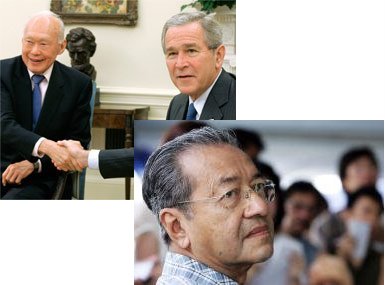
The elder statesmen of Singapore and Malaysia have had very different fate since they gave up power willingly.

Singapore's Minister Mentor Lee Kuan Yew, 83, continues to be a dominant figure in the tiny island. He has retained a portfolio in the cabinet to help oversee the development of the country although he stepped down as Singapore's longest-serving PM in 1990.

He has just wrapped up his trip of Europe and the United States, becoming the first Southeast Asian leader to be conferred the Woodrow Wilson Award for public service.

Kuan Yew also toured gaming capital Las Vegas and met with US President George Bush at the White House.

In short, Kuan Yew continues to be feted.

Across the causeway, the story is rather different.

Former Malaysian PM Dr Mahathir Mohamad, 81, has been a lonelier figure since he stepped down as the country's longest-serving leader in 2003.

After keeping relatively quiet in the first two years, he shocked many when he unleashed his full fury on successor Abdullah Ahmad Badawi six months ago.

Badawi's decision, among other things, to shelve the bridge project to replace the Causeway to Singapore was the proverbial last straw for Dr M. Although some of his criticisms are valid, many feel he should have kept quiet after his retirement. Or he should not have given up all his political and government posts in order to provide a better check on the government.

The bickering culminated in a so-called peace talk over the weekend. But Dr M continued to chastise Badawi soon after the meeting. Nobody knows how the political drama in Malaysia will unfold.

Kuan Yew and Dr M are both strong personalities. They have helped their respective countries progress beyond the call of duty. They both relish being the Asian voice in their straight-talking manner. They have both secured their place in history, although Dr M's legacy is being unraveled.

Despite their stature, it is sad that the two leaders have not been able to work together to resolve all the differences between the two governments.

Malaysia will continue to sell cheap water to Singapore until 2061, Malaysian railway land in Singapore will remain undeveloped, Singapore is barred from using Malaysian airspace or buying Malaysian sand for reclamation, and the 83-year-old causeway continues to be the umbilical cord connecting the two countries.

Thursday, May 17, 2007

Vanishing islands

A couple of days ago Reuters carried an interesting report that Indonesia has so many islands it has not been able to count them all and is having a hard time finding names for them.

Officially there are about 17,000 islands, but the report said that number may drop as one minister fears hundreds of islands might vanish because of rising sea levels from global warming.

The report said the issue has become a hot topic after Indonesia upset neighbouring Singapore recently by banning sand exports to the city state, blaming sand mining for literally wiping some of its islands off the map.

Another way to capitalise on the problem is to sell some of the islands, most of which are uninhabited any way. Land-scarce but cash-rich Singapore will almost definitely be a keen buyer if Indonesian nationalism doesn't get into the way. Of course, most Indonesians will object to such a proposition due to nationalist sentiments.

But Indonesia should have sold some of the less strategic islands at the height of the regional financial crisis, instead of turning to the International Monetary Fund for help. The IMF bailout probably cost more to national pride than the loss of a few atolls.

Wednesday, March 07, 2007

Konfrontasi Again

While Singapore is sorting out its problems in the region, its two immediate neighbours -- Indonesia and Malaysia -- are having bigger headaches.

They have yet to fully resolve the competing claims over an oil-rich area off Borneo and were almost on the brink of a war.

According to The Straits Times this week, the Indonesian Parliament has called for a tough line on reported Malaysian military incursions, with two MPs saying Malaysians on the wrong side of a disputed border should be shot. This is definitely an escalation of earlier rhetoric.

'Once in a while we need to shoot them,' said Mr Soeripto, a member of the parliamentary commission on defence and foreign affairs at a hearing with Defence Minister Juwono Sudarsono and armed forces chiefs at the House of Representatives yesterday.

'Don't be afraid if something escalates from the shooting. We have four million volunteers who are prepared to die,' he was quoted as saying by news portal Detikcom.

The meeting was called to discuss the latest flare up in the border spat with Malaysia over the disputed oil-rich region which the Indonesians call Ambalat, in the sea off Borneo.

He said that he deployed warships to drive the intruders out, but added that the Malaysian navy also entered Indonesian waters around Ambalat 35 times last year.

The dispute over Ambalat took a turn for the worse two years ago, when Malaysia's state oil company Petronas awarded an oil concession to a subsidiary of oil giant Shell in an area where Indonesia had been granting oil concessions.

There was a standoff in the disputed area a month later, almost pushing both sides to the brink of war but tensions eased after they agreed to settle the dispute diplomatically.

We can definitely see Konfrontasi all over again should Indonesia lose its claim over Ambalat. Indonesia is still seething over the loss of two tiny islands near Ambalat in the Celebes Sea -- Sipadan and Ligitan -- to Malaysia in a legal battle in 2002.

No wonder Indonesia is so protective of its territory and its sand although it has over 17,000 islands.

PS: The Malaysia-Indonesia border dispute had translated into cyber warfare, according to this interesting article. The Indonesian phrase "Ganyang Malaysia" or "Crush Malaysia" -- used during Indonesia's resistance towards the creation of Malaysia in the 1960s -- had been used to deface some Malaysian websites. So far, there's no known instance of "Ganyang Singapura" in Singapore cyberspace.