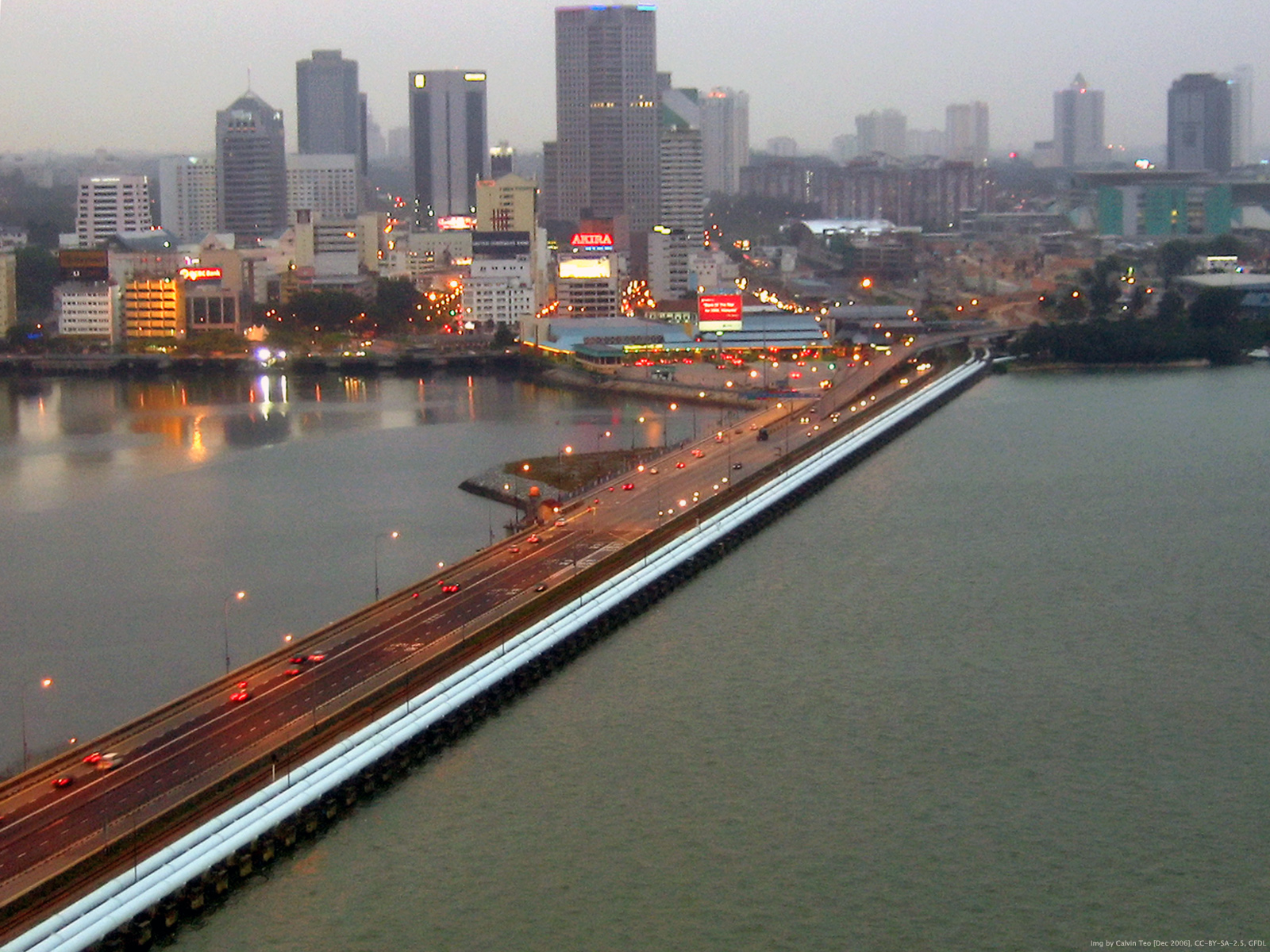
Showing posts sorted by date for query CAUSEWAY. Sort by relevance Show all posts

Saturday, March 29, 2008

Did bloggers really create the Malaysian tsunami?
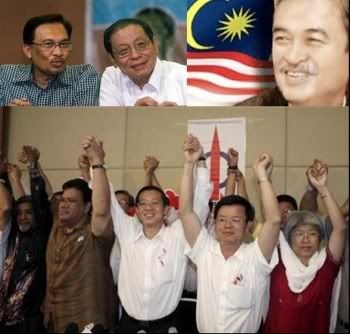
This is a well-written commentary by a former journalist in Singapore's TODAY newspaper today. Cherian George looks at the role of the Internet and blogs during the watershed elections in Malaysia this month.

It's a timely reminder that bloggers only play one part in the big scheme of things. Bloggers on both sides of the causeway will never replace mainstream media, despite general unhappiness with the two governments' mouthpieces on certain key issues.

But ultimately, editors and writers -- whether they are in the mainstream media or blogosphere -- must be credible. Both platforms also need to engage each other more frequently to give a more complete picture to people in Singapore and Malaysia.


Did bloggers really create the tsunami?
Cherian George
March 29, 2008

MALAYSIAN Prime Minister Abdullah Ahmad Badawi's admission this week that his government did not pay enough attention to the Internet is one of the sexiest explanations yet for its shock defeats in the recent elections.

Perhaps bloggers will now replace bomohs as the suspects of choice behind bizarre political phenomena like those witnessed on March 8.

Some of the hype around this admittedly magical technology is justified. By dramatically lowering the barriers to entry for wide communication and collaboration, the Internet is quite simply the most powerful platform for innovation — including political innovation — in the history of civilisation.


However, every sober analysis of its impact since the Internet's mid-1990s "big bang" has come to the same conclusion: The technology is not powerful in isolation; the World Wide Web weaves its wonders only in concert with other old-fashioned forces.

Thus, the vibrancy of Internet politics in Malaysia is very much a reflection of an offline environment of lively opposition politics and civil society activism.
Mr Jeff Ooi — Malaysia's mr brown — could transition from blogger to victorious parliamentary candidate because the Democratic Action Party was well placed to harness his popularity.

Similarly, aliran.com was able to churn out influential reports because it is backed by the established Penang-based human rights non-governmental organisation, Aliran.
Less savoury attributes of Malaysian cyberspace, such as its poison pen practices, are also rooted in the country's offline traditions.

Internet power should also be seen in the context of the wider media environment. While media companies are often wedded to one medium or another, most users are promiscuous by instinct.


They flit between media, each promising its own uses and gratifications — perhaps a newspaper for comprehensive news, television news for its pictures, a blog for personal insight, an activist's website for biting commentary, SMS for the latest gossip or joke, coffeeshop talk to share their own views, rally attendance for a sense of community, and so on.


If people suddenly gravitate towards one medium, it is often because another has failed to meet their expectations. This is certainly the case in Malaysia, where the crippling of the mainstream media by government control is the main reason why Malaysians have flocked online.

Even the editors of the leading independent site Malaysiakini humbly concede that their success isn't because they are so great — they are still resource-poor by news organisation standards — but because their mainstream rivals are found wanting.

Therefore, the government's fundamental mistake was not that it neglected cyberspace, as claimed by the Prime Minister, but that it failed to address offline problems — which were then exposed and exploited by Internet-empowered opponents.

Officials should have learnt from the Reformasi protests of almost a decade ago, when its mainstream media stranglehold resulted in media coverage out of sync with the public mood, with massive losses in newspaper circulation and a windfall for alternative websites such as Malaysiakini and Harakah Daily.


Now, officials are talking of courting independent bloggers or investing in their own. But this will not fix the real problem of inadequate respect for freedom of expression, resulting in a lack of credibility for all media linked to the state.
Comparisons with Singapore — Malaysia's fraternal twin — are irresistible.

If even the Malaysian Prime Minister has acknowledged the political impact of the Internet, does that not make Singapore — with its far greater Internet penetration levels — ripe for its own electoral tsunami? Only if one imagines the Internet to be some kind of magical force, which it isn't.


Distilling more thoughtful analyses of the Malaysian elections, 2008 appears to mark a tipping point at which voters decided that poor governance was no longer tolerable. The ruling alliance — and practically everyone else — had expected racial loyalties and a controlled mass media to compensate for its failures and inefficiencies.

But a threshold appears to have been reached, indicating that ideological advantages are finite, while good governance is all.
Like Malaysia, Singapore is run by a dominant political party that believes that the media's role is not to set the political, social and economic agenda. That is to be left to the elected leaders of the day. Instead, the media is seen as a partner in nation building.

The People's Action Party has generally not used its ideological control as a substitute for performance, but rather to give policy-makers a buffer against interference by interest groups and dissenting voices, allowing them to frame the agenda and manage public opinion in the short term.


Long-term legitimacy has been built on the tangible success of its policies. The drift from the controlled mainstream to freer alternative media has therefore been much less evident in Singapore than in Malaysia.


Another major difference is that Singapore's alternative media doesn't have the thick soil that their Malaysian counterparts thrive in. The political environment in Singapore is more predictable and sanitised in a way that Malaysia's never was.

This is reflected in the two societies' alternative media: Malaysia's are more organised, mobilised and committed.
Malaysia shows that determined activists can amplify their impact with the Internet. But Singapore shows that the Internet cannot electroshock an otherwise quiescent public into action, no matter how well wired it is.

Cherian George is an Assistant Professor at the Wee Kim Wee School of Communication and Information, NTU, and the author of Contentious Journalism and the Internet: Towards Democratic Discourse in Malaysia and Singapore (Singapore University Press, 2006).


Another good commentary: Hope spreads from tsunami, The Star (

Saturday, March 22, 2008

Causeway blues again, Part 3

Note: Image from Intelligent Transport Systems Center, LTA (28 Mar 2008, 9:50am)

Recent reports, including The Straits Times article below, about the massive traffic jam at the causeway tell only half the story. The gridlock at the causeway, as a result of the search for a missing terrorist in Singapore, has merely highlighted current problems faced at the bridge linking Singapore and Malaysia.

Even without the stepped-up security in the search for Mas Selamat Kastari, many people have had to suffer from the daily crawl at the causeway. Sophie's World has long highlighted the less-than-deal situation at the causeway. See early postings such as Missing MRT link, Causeway blues again, Part 2, and Malaysian bullet train going to Singapore?

Will Singapore and Malaysia work together to resolve the traffic woes at the causeway once they manage to nab the terrorist? Or will they think that things will go back to 'normal'?

March 22, 2008
Tighter immigration checks hit JB businesses
Takings dip by up to 75% as S'poreans avoid massive Causeway jams
By Arlina Arshad

ON A typical weekend, many Singapore cars can be seen at the Mobil petrol station close to the Johor Baru immigration checkpoint or heading for the town's malls.

Yesterday, the petrol station was serving more J-plate vehicles than S-plate ones. The town's restaurant owners, retailers and cabbies have also noticed slacker business over the past few weekends.

Three words explain this: Mas Selamat Kastari.

Petrol station cashier Rozana Mohd Din, 33, is certain that the heightened security following the escape of the 48-year-old Jemaah Islamiah terrorist is responsible for this.

The more thorough checks on travellers and vehicles passing through the Woodlands Checkpoint are keeping Singaporeans away.

Ms Rozana noted that the petrol station usually serves 100 Singapore cars on weekdays and 150 on weekends. She is seeing only half of that number now. 'It's so unfair that businesses here have to suffer because of one man,' she said.

Other JB businesses complained that takings had fallen by 20 to 75per cent. All expect this month to go down as one of the worst sales months in recent times.

When The Straits Times visited JB town centre yesterday, business at the food stalls appeared brisk. But stallholders said the customers were not quite as free spending as Singaporeans.

Hawker Ahmed Abdullah, 45, who sells Indian food, said: 'Singapore customers may come only once a week, but they spend a lot. They come with friends and order whatever they fancy on the menu.

'They can spend RM30 (S$13) in one sitting. Malaysian customers take a long time to decide - and when they do, they spend RM3.'

At City Square, cash registers were not ringing despite the ongoing sale. Boutique assistant Lim Kim Moi, 35, whose boss had chided her for the poor sales, said: 'Now, I am forced to be pushy and get the Malaysian customers to buy.'

Taxi drivers, too, were cooling their heels in a long line of cabs outside the JB checkpoint yesterday.

Cabby Masdan Rudin, 35, said: 'On weekends, I usually take 15 Singaporeans to Senai airport and bus terminals. Now, it's down to 10.'

The worst thing for these businesses is not knowing when the jams will ease and the crowds return.

DVD seller W.Y. Tan, who has suffered a 75 per cent drop in takings, said: 'If it's going to be like this for the next two months, I might have to start selling char kway teow.'

Friday, March 14, 2008

Selamat caught at Causeway? Part 2

The satire continues. According to a frequent visitor to Sophie's World, a joke is circulating as to why escaped Singapore terrorist Mas Selamat Kastari is likely to be in Malaysia and Indonesia.

The two neighbours of Singapore have clear signs that say "Selamat Datang" to welcome visitors. Selamat Datang is the common Malay phrase for "Welcome" or "Selamat is Coming" in this context.

Of course, there is a clear sign at the causeway that says "Selamat Datang" to all visitors -- legal and illegal -- from Singapore. :-)

Thursday, March 06, 2008

Selamat caught at causeway?

Hooray!!! Talkingcock (which also designed the funny pix above) has published another piece of satire by Sophie's World. :-)

Do take note that the article below is pure satire. Sophie's World hopes that the authorities will soon nab the real fugitive! The authorities have already stepped up security at the causeway, as reported by The Straits Times today.

Selamat Caught at Causeway
Posted on Thursday, March 06, 2008
by Sophie's World

Singaporean fugitive Tak Selamat has finally been nabbed when he tried to sneak into the notorious Malaysian city of Johor Baru via the congested causeway over the weekend.

This has ended the massive manhunt for the limping Islamic militant, thanks to the tip-off of Woodlands resident and contractor Ker Mit Seng who was in a pirated taxi with Tak Selamat.

Mr Seng felt something was amiss when he chatted with Tak Selamat during a normal three-hour traffic gridlock on the mile-long causeway linking Malaysia and Singapore.

"He not very interested to talk about cheap prostitutes and pirated DVDs in JB. Damn strange. So I SMS police lor," Mr Seng said.

He also disclosed that Tak Selamat was incensed as he was hauled away by security forces of the two countries, ending the nationwide dragnet in 72 hours.

"Pukimak (fucking) causeway. So fucking jam all the time," Mr Seng cited Tak Selamat as saying.

Security forces of Malaysia and Singapore were ecstatic with their joint efforts in nabbing the alleged militant, who was in heavy disguise as an Arab businessman in a flowing robe.

"This shows our wisdom in keeping the causeway as a strategic bottleneck to prevent fugitives from crossing over to Malaysia so easily," crowed Singapore top security man Chin Tuah Kee.

He said Singaporeans and Malaysians should be grateful that Tak Selamat and friends didn't manage to blow up the causeway and other key facilities in Singapore a few years ago.

The increasingly heavy traffic at the causeway has worked to the advantage of the security forces, who were embarrassed by the escape of a string of well-known fugitives via the causeway in the past.

Well-known figures who had fled Singapore to Malaysia via the causeway included the Malaysian murderer of a China girl in Singapore, a Singapore Chinese gangster called One-Eyed Dragon and a former senior executive of the National Kidney Foundation.

Malaysian chief police Ayam Besar joined in the crowing.

"Ya, betul (correct). The causeway is very good despite the traffic jam lah. It would have been susah (difficult) for us to catch Tak Selamat if he had tried to swim across the Johor Straits," Ayam Besar said.

He added: "He may have escaped a toilet, but the Johor Straits has a lot more shit, and Tak Selamat would have drowned in it. We would not have caught him alive."

Monday, February 25, 2008

Inflationary Asia


Inflation is creeping up across Asia. The headline figure in Singapore has hit a 25-year high with inflation hitting 6.6%.

The figure seems to be higher than expected but the Ministry of Trade and Industry said the January inflation figure was 'consistent' with the government's official inflation forecast.

As pointed out by the AP report, the Singapore government recently raised its inflation forecast for the year to 4.5-5.5%, faster than the 3.5-4.5% announced in November. The Straits Times today said that inflation in Singapore could hit levels not seen since the oil crisis of the late 1970s.

The Singapore government will no doubt think of more ways to contain inflation. An even stronger Singapore dollar is definitely a certain policy option at this stage.

While Singapore's inflation rate seems higher than expected, the Consumer Price Index across the causeway seems too tame in the current environment. According to Bloomberg, Malaysia's inflation is set to hit a 10-month high of 2.9% this year.

Like Singapore, Malaysia has a very open economy. As a result, the two countries do pay the price for imported inflation.

Sophie's World has always had a nagging feeling that the inflation rate in Malaysia is understated. Prices of some items, especially imported goods, in Malaysia seem to be rising more rapidly than those in Singapore.

In many cases, prices of certain items in Malaysia are higher than or equivalent to those in Singapore. This is just Sophie's World unscientific observation. :-)

Even the threat of higher inflation has become an election issue in Malaysia. Check out the Democratic Action Party's campaign song (youtube video above), which includes a pledge to tame inflation in the country. Is there a need to tame it if it is rising at less than 3%?

While inflationary pressure is rising across Asia, the fast-growing region is not expected to see hyperinflation. Asia is still expected to see healthy, albeit slower, growth despite the increasing likelihood of a recession in the United States due to the sub-prime woes.


Earlier postings:
Rising cost of crime, 1 June 2007
Rising cost of living in Malaysia
, 16 Nov 2006
Rising cost of living in Singapore
, 16 Nov 2006

Tuesday, February 19, 2008

Free up Asean skies!

Singapore Airlines (SIA) and Malaysia Airlines (MAS) are not about to slash fares anytime soon for the popular Singapore-KL sector despite the recent entry of budget airlines, according to The Straits Times tonight.

Competition has had minimal impact on yields and traffic, ST cited SIA chief executive officer Chew Choon Seng and MAS head Idris Jala as telling reporters on Monday on the sidelines of the inaugural Singapore Airshow Aviation Leadership Summit.

The report added that it took six years of lobbying for governments on both sides of the Causeway to clear the runway for a total of four budget flights a day between Singapore and KL, which Tiger Airways, Jetstar Asia and Malaysia's AirAsia started operating on Feb 1.

Between them, ST said SIA and MAS operate a total of 13 daily flights, offering more than 21,000 round-trip seats a week - four times the capacity of the budget boys.

Well, Sophie's World has a simple solution: Time to free up the KL-Singapore air sector completely, instead of waiting for the Asean Open Skies pact to take effect by the end of this year.

There is still a massive bottleneck for long-suffering travelers between the two countries.

Wednesday, February 13, 2008

Missing MRT link, Part 3

The JB-Singapore MRT link has not been given the green light yet, contrary to an earlier Chinese newspaper report.

Instead, the governments of Singapore and Malaysia have set up a working group to look at ways to help improve transport links between the two countries. And one option being considered is to extend Singapore’s MRT network into Johor, according to The Straits Times report today that cited Singapore’s Ministry of Transport. The Transport Ministry has not issued a media statement as at blogging time today. :-)

The news is definitely significant as it shows the intention of the two governments to work together to facilitate the massive cross-border flow of people between Malaysia and Singapore.

But can they really come up with a neat solution? The answers are not so clear due to the lack of information. There are many, many questions and issues.

For a start, the ST report said the proposed MRT link could start at Woodlands in Singapore and end at the Iskandar Development Region in Johor. Where exactly is it in IDR?

The IDR covers a huge area, accounting for more than 10% of the land area of the state of Johor, which itself is some 28 times bigger than Singapore. The state capital of JB, which is the closest link to Singapore, itself is in IDR. So is Senai Airport, which is about 30km away from the Malaysia-Singapore border.

It’s more ideal if the MRT link begins in Woodlands as reported and end in the heart of JB itself, instead of somewhere else within the IDR.

And what’s the working group’s plan to improve traffic flow along the causeway – a 1-km land bridge linking Singapore and Malaysia? As mentioned earlier, this is the main bottleneck and the source of much political angst between the two governments.

But building a new bridge for the MRT without resolving the causeway problem won’t be ideal. It is akin to doing a minor heart surgery without treating the main clogged artery.

The clogged artery must go, eventually. In its place, a new overhead bridge must be built to help resolve many problems in one fell swoop as argued in Cleaning up Straits of Johor good for Singapore too last year.

The working group must work out a holistic plan to improve traffic flow between the two countries. They must take into account all ways to improve road, rail and even sea traffic in the dirty Straits of Johor.

The current causeway chokes the straits and does not even allow boats or sampans to sail from the northwestern coast of Singapore to the southeast side of Johor, without making one big detour.

Another missing link is a high-speed train from KL to Singapore. Will Francis Yeoh build another rail bridge to Singapore? Or will he dig a tunnel under the Straits of Johor?

Sophie’s World hopes that the Singapore-Malaysia working group will triumph over their respective internal politics and come up with a holistic transportation blueprint that will benefit people on both sides of the straits.

Hopefully, such a plan will forge closer ties between the two close neighbours and withstand time.

Tuesday, February 12, 2008

Missing MRT link, part 2

Is the Singapore MRT finally going to the southern Malaysian city of Johor Baru?

Forum discussions based on a Chinese newspaper article posted on SingaporeSurf on Feb 9 seem to suggest so.

So far, I have not seen any article on the same issue by mainstream English newspapers on both sides of the causeway. Other parties -- the governments of Malaysia and Singapore, and SMRT -- have not made any announcement to clarify whether it is indeed true that the two governments had given the green light for the significant cross-border project. So it's not quite clear what the real situation is, as my understanding of Chinese is almost zero.

As argued earlier, it is a necessary link in Singapore's MRT blurprint. But there are many complications surrounding such a project, as mentioned in an earlier posting -- JB-Singapore MRT?

Wednesday, February 06, 2008

Same old sight

More than a quarter of the population in Singapore must have headed to Malaysia during the Chinese New Year.

This is based on the figure of about 1.35 million travellers that passed through the Tuas and Woodlands checkpoints on five days of the festivities last year, according to Singapore's Immigration and Checkpoints Authority in a ST report this evening.

And as in previous years, many were caught in a massive crawl at the Singapore-Malaysia border. This is seen in the ST picture showing the gridlock at the causeway, which links Singapore and Johor Baru in Malaysia. The report said vehicles were backed up several kilometres. Horns blared and tempers flared as motorists saw their chances of making it on time for their reunion dinner.

Their need to return for their reunion dinner reflects the close family ties on both sides of the causeway.

A friend had to drive 300km from KL to JB to pick up her husband, who works in Singapore. They then braved another 300km back to KL. This is because he couldn't get ticket for any mode of Singapore-KL transportation -- bus, the slow KTM train or new budget airlines.

*Sigh*

Tuesday, February 05, 2008

Singapore's glittering Autobahn, Part 2

Note: Wikiepedia pix shows the current causeway linking southern Singapore and Sentosa island. The other causeway, which connects northern Singapore and Malaysia, has been retarding the flow of water in the dirty Straits of Johor for more than eight decades.

It's great to read about the latest plan to improve traffic access to the tourist island of Sentosa from Singapore's mainland.

According to The Straits Times, the roads leading to Sentosa, VivoCity and HarbourFront will be widened to cater to an anticipated increase in traffic into the area. With one of Singapore's two integrated resorts opening on Sentosa and new condominiums to be built in the area by 2010, traffic is likely to go up by 30 per cent, said the Land Transport Authority yesterday.

The ST article didn't mention it, but earlier news reports had said that Genting International's Resorts World at Sentosa -- the developer of the integrated resort and casino on Sentosa -- had started work on the second bridge to link Sentosa and the mainland.

The second bridge is aimed at easing visitor traffic as over 15 million of them are expected to visit the Resort when it opens in early 2010 or 2011. The report said the 710-metre, 3-lane bridge will run parallel to the existing causeway which connects Sentosa to the mainland. And when completed in September 2009, both will be merged.

The latest roadwork and the new Sentosa bridge will be a great addition to the new transport blueprint unveiled by the government in the past two weeks. Apart from plans to improve the public transportation system, the government will build the North-South Expressway by 2020. Singapore's Autobahn will cost S$8 billion, or at a stggering S$381 million per km.

Many locals and foreigners will enjoy seamless travel from Sentosa to the rest of Singapore, thanks to the government's transportation blueprint.

But they will almost certainly hit a major road bump should they wish to cross over to the southern Malaysian city of Johor Baru. The two countries have not been able to work together to jointly build a bridge to replace the old and congested causeway. A new and wider overhead bridge, which will have many benefits, shouldn't cost more than S$1 billion each.

This is a rough estimate based on the two countries' construction bill of over RM2.4 billion (slightly more than S$1 billion based on today's exchange rate) to jointly build the longer Second Link bridge when bilateral ties were a lot warmer in the mid-1990s.

Malaysia's bill came up to more than RM1.2 billion. Singapore's portion was last reported to be about S$600 million.

A new bridge to ease the massive cross-border flow between Malaysia and Singapore makes good sense. ST had earlier estimated about 250,000 people enter Malaysia via the causeway every day. This works out to more than 90 million people each year, which is a staggering number as it is nearly 20 times the population of Singapore. The traffic volume at the causeway is 6 times higher than the projected number of visitors to Sentosa.

It will be ideal if one could travel from Sentosa all the way to Malaysia seamlessly one day via two wide bridges and the glittering S$8-billion Autobahn.

Sunday, February 03, 2008

S'pore-KL budget flights take off but...

The long-protected Singapore-KL air route has finally been opened up, slightly.

Singapore and Malaysia newspapers highlighted the historic entry of budget airlines in the air sector between Singapore and Kuala Lumpur on Feb 1. Three new players -- Malaysia's AirAsia, and Tiger Airways and Jetstar Asia of Singapore -- will operate a total of four flights a day. Most of the flights will still be dominated by the expensive Singapore Airlines and Malaysia Airlines.

Sophie's World has long argued for the liberalisation of the route, which was dominated by the national carriers of Malaysia and Singapore for the past three decades. It just didn't make sense to shield the two national carriers from the new kids on the block since budget airlines came into play in 2003.

Passengers and commentators will continue to analyse the situation and applaud the move as another step towards open skies in Asean. Sophie's World fully endorses Asean's Open Sky pact by the end of this year to hasten economic and social integration of the region with over 500 million people -- more than one-third the population of China, which is the world's most populous country.

But an open sky pact alone will not nudge the region's disparate economies towards greater integration as long as many countries remain highly nationalistic.

In the case of closely-knit Malaysia and Singapore, the long-term solution is not more flights alone as many people still won't be able to travel freely. Why? This is because air travel is still relatively expensive due to the litany of taxes imposed, and the subsequent connection cost to the city.

For example, The Straits Times highlighted the family of 21 who collectively spent S$3,200 on the maiden budget flight from Singapore to KL. It's a lot cheaper than the S$8,800 they would have forked out on either Singapore Airlines or Malaysia Airlines for the same round-trip flight. At S$3,200, it works out to S$152 per person for a round-trip fare, including all the taxes.

The family could have chartered an entire van or bus for far less and used it to ferry them around in KL for one week. But bus was not an option for them as they said they had some toddlers who couldn't stomach the bus journey to KL. That's not the point here.

The point is at S$152 per person (some budget tickets were given away for free as part of the maiden flight promotions), it is still a high price to travel 320km from Singapore to KL. Budget airfare, inclusive of taxes and surcharges, is still at least 50 percent higher than what many luxury coaches charge between the two cities. In fact, ST said many people paid under S$200 each for a budget airline seat. This is more than double the return bus fare of S$92 charged by luxury coach Aeroline.

The long-term solution to facilitate the extremely high traffic volume between the two capitals is a high-speed bullet train service. It's an idea that was mooted by several Malaysian businessmen in the 1990s and revived recently by Francis Yeoh.

Even former Malaysian Prime Minister Dr Mahathir Mohamad had pushed for the idea as a way to further integrate the two countries. As part of the fast train service between KL and Singapore, Dr Mahathir had proposed a rail tunnel under the narrow Straits of Johor, which separates Malaysia and Singapore.

The rail tunnel project was part of the transportation blueprint in the southern Malaysian city of Johor Baru that involved building a new overhead bridge to replace the old causeway, which connects the two countries.

Although Singapore had officially welcomed the rail tunnel idea, negotiation to build a new overhead bridge was almost stillborn from the beginning. Malaysia finally called off the bridge project two years ago as Singapore had made certain demands -- the right to use Malaysia's airspace and buy sand for its land reclamation -- that Malaysia could not fulfill.

Francis Yeoh appears to be still keen to push ahead with the bullet train project although the rail tunnel and bridge components have been derailed. He could build a new fast rail link to Singapore should Malaysia secure Singapore's blessing, or end the rail track in the city of JB.

The answers are still hazy.

What is clearer is that a fast train service could zip from Singapore to the heart of KL in just 90 minutes -- half the time needed to drive on Malaysia's North-South Expressway. The point-to-point travel will be even faster than air travel due to time needed for airport immigration clearance, baggage clearance and the 57-km road or rail connection between the Kuala Lumpur International Airport and the capital.

Of course, demand will hinge on the eventual price of a train ticket. Sophie's World is hopeful that the price ticket for a fast train service, should it materialise, will be competitive compared to full-fledged airlines or even budget airlines.

But planners in Singapore and Malaysia must not ignore the ultimate bottleneck for road and rail travelers between the two countries -- the jointly-owned causeway.

Monday, January 28, 2008

Missing MRT link

Source: The Straits Times

Singapore will one day have the most extensive rail and subway network for any country in the world. The forward-thinking Singapore government has announced plans to spend S$40 billion to double the MRT network by 2020.

According to The Straits Times on Jan 25, Singapore will have 278km of rail link, from 138km today. Its network density will rise from 31km per million residents today to 51km per million - surpassing that of major cities like Hong Kong and Tokyo, and comparable to current densities in cities like New York and London.

Will the Singapore MRT blueprint be completed by then? Unlikely. There's always room for Singapore to create an even more extensive network as the population grows.

A missing link could be a MRT rail track from Singapore to the southern Malaysian city of Johor Baru. It's not a radical idea. In fact, businessmen on both sides of the causeway are toying with the idea.

Such a link will definitely be useful to help ease the massive traffic at the causeway, the land-based bridge that links Singapore and Malaysia.

ST had estimated about 250,000 people enter Malaysia via the causeway every day. This works out to more than 90 million people each year. This is a staggering number as it is nearly 20 times the population of Singapore. The number of people using the causeway is almost one-fifth the 414 million riders who used Singapore's MRT in 2007.

Of course, there is no certainty that Malaysia and Singapore will agree to the proposed JB-Singapore MRT link. There are simply too many complications at the government-to-government level although it is a desirable project. The two governments can't even agree to build a new overhead bridge to replace the aging causeway and resolve a host of other bilateral problems.

And can they agree to a common ticketing system even if they manage to build a MRT link between Singapore and JB? Don't bet on it!

Sunday, January 27, 2008

No Swimming

THE Urban Redevelopment Authority has unveiled plans to create a coastal promenade and a park in Woodlands, which is on the northern side of Singapore.

According to The Straits Times, residents and those living in nearby residential estates can look forward to a new waterfront recreational playground, right at their doorsteps.

The newspaper said URA will be building a 1.5-km long promenade and a nine hectare park along a tranquil stretch of coastline in Woodlands to improve accessibility to the area and to open up the scenic waterfront. The report added that the promenade, in the form of boardwalk will be built over the seawall to bring visitors closer to the water's edge.

Although it's not clearly stated in the ST report, Sophie's World assumes that the Woodlands coastline promenade will be along the Johor Straits as it is located on the northern side of Singapore.

The narrow strip of water separating Singapore and Malaysia is one of the filthiest bodies of water in the region. It's partly due to the land-based causeway, which prevents the natural flow of water in the distressed straits, as mentioned in an earlier posting.

Unfortunately, the two governments have not been able to come to terms to build a new overhead bridge to replace the old causeway. An overhead bridge will allow the dirty water to flow more naturally to the open seas.

In the meantime, the Singapore planning authorities must do the following to help ensure public safety and hygiene along the proposed Woodlands promenade:

1. Fence up the Woodlands coastline promenade. This will stop any person or dog from taking a dip in the giant cesspool and contract any skin disease;

2. Put up 'No Swimming' sign-board clearly along the promenade;

3. Ban fishing as fish in the Johor Straits are probably toxic due to the high levels of lead, mercury and e-coli bacteria;

4. Ban water sporting activities such as kayaking as exposure to the toxic straits could be a health hazard; and

5. Ban all flying objects such as kites or toy planes as they could well infringe the Malaysian airspace and start a new bilateral row!

Friday, January 25, 2008

The Lingam defence

The latest Off the Cuff column in the lifestyle section of Singapore's Business Times is hilarious. I'm sure many Malaysians and Singaporeans can relate to it. Enjoy and forward it! :-)

Looks like I wrote this - did I?

By JAIME EE

MY fellow lawyers, citizens and other distinguished friends who may have been caught in an incriminating video or two - greetings. Welcome to our workshop titled: 'Never Say Die Even When Your Face Is Staring At You From The Video - henceforth known as the Lingam Defence.'

Now, this is a very interesting strategy, inspired not by a famous brand of chilli sauce, but by a well-known lawyer of the same name across the Causeway currently caught in a judge-fixing scandal. Upon watching a video allegedly of him talking on the phone and being asked to confirm his identity, he told the court, 'It looks like me, and the voice sounds like me,' but would not say if it was him, or not him, or even possibly him in the video.

Now, any armchair litigator or court kaypoh would pooh-pooh him for trying to pull a fast one. But, my friends, we who live by the mantra 'open to interpretation' have found this to be a ground-breaking defence that, with some modifications, can be used not just in court but in all manner of situations that require deflection of blame.

The focus of this workshop then, is to show you how to use the Lingam Defence in almost any scenario. For example, in the original case, it could subsequently be argued that if one does not look at oneself in the mirror all the time, it is entirely possible to look at a video and think 'that can't be me', especially if one's mental picture of oneself is 20kg lighter and with a more trendy hairstyle. Alternatively, one could also be struggling with philosophical issues, hence he could be referring to himself in the metaphysical sense as in 'Is that really me in the mirror? Or is that just someone else with the same face?'

Similarly, depending on what situation you find yourself in, the same principles can apply. Say, for example, you are presented with a video of yourself having sex with a florist-cum-personal friend. You could delay a public resignation by arguing, 'It looks like me and uh, sounds like me, wait a minute, oh wow, is that really me? Am I that athletic? I didn't know I could do that . . . no no that definitely can't be me. But you know, if it was me, I think I'm pretty hot. But I'm not saying it's me.'

Or, in another scenario where you are caught feeding monkeys in the nature reserve and are being fined $4,000. 'Sir, it may look like me and sound like I was feeding the monkeys, but have you considered the possibility that I was minding my own business when a monkey which did not like the bread someone else gave him, came and shoved it in my hand just before I was filmed? It sounds like I was saying 'here, monkey, have some bread', I was actually saying, 'Eee, monkey, loathsome breed'. Hence, I feel that you should send this tape to an overseas expert for verification and to prove that it was a human who taped it and not another monkey.'

Or, in the case of a chikungunya-carrying mosquito mistaken for a dengue-causing one: 'It looks like me and sounds like me, the resemblance is so uncanny that when I look in the mirror I try to swat myself.'

And there you have it. The Lingam Defence workshop - it looks and sounds like a workshop, but it may or may not have been one. We might offer more, but I can't confirm or deny it.

Wednesday, January 23, 2008

One less piece of red tape

It's definitely a welcome sign by Malaysia to do away with the need to fill up the white immigration entry form at the causeway and the Second Link as part of a quiet trial run, according to The Straits Times.

While the Malaysian move may help ease the bottleneck on its end, there is another bottleneck at the Singapore immigration.

The two governments must do something more drastic to help ease the heavy traffic at the overused and congested causeway.

ST estimated about 250,000 people enter Malaysia via the causeway every day, and another 30,000 use the Second Link.

This works out to more than 100 million people a year, which is a staggering number as it is over 3 times the combined population of the two countries.

One solution could be a common immigration system, as Malaysia's earlier plan for a passport-free zone in Johor Baru didn't take off.

A common or joint immigration clearance will help ease the flow of people and goods in cars, lorries, buses and trains that use the causeway.

It's extremely unproductive for millions of people to open their car boots for immigration inspection twice, hand over their passports to unfriendly immigration officials twice, bring their luggage up and down from buses or trains twice, and pay toll twice.

But it's a tall order to expect the two governments to work together for the common good of people on both sides of the causeway.

This is because the two governments can't even agree to build a new overhead bridge to replace the causeway and clean up the filthy straits, and resolve a host of other bilateral problems.

In the meantime, many long-suffering travelers just have to think twice about using the causeway!

Thursday, January 17, 2008

Elements

By Uncle Cheng

The local economic boom continues despite the volatility in the stock market, which has been behaving like a see-saw in the children’s playground. Walking about Hong Kong I see evidence of a tremendous increase in new retail businesses.


In Central district the sky-high rents make it impossible for poorer newcomers to obtain retail space. Only the big international companies with their famous brand names can afford to exist.


Occasionally you see a new shop taken up by a struggling small-scale entrepreneur but their window displays are usually no match for the extravagance of windows at places like Louis Vuitton and Hermes. Go inside these high-end boutiques, pass the black-suited security guards with their intercom earpieces, and it is another world — the world of the mainland shopper. In one luxury boutique I spotted one mainland businessmen who was escorting six pretty young girls and paying for all their many purchases.


In Causeway Bay there is also evidence of boom times but there the new businesses are different — cheaper products and fast-food outlets for those in a hurry between their shopping expeditions.
As for the shopping malls I suppose it was the huge success of Pacific Place that changed Hong Kong for ever. I recall when Pacific Place first opened its doors, there was much scepticism — ‘the location is not convenient’ was a frequent comment. Of course, the sceptics were not just wrong, they were hugely wrong.

Then came the even bigger shopping extravaganza of the IFC mall. Again I heard people express scepticism about the location. Yet IFC’s first years have been if anything even more successful than Pacific Place was in its early days. The massive, iconic skyscraper above the IFC with its thousands of well-paid workers, has transformed the entire area.


The big question now is if the MTRC can repeat the success of the IFC development with its even bigger venture in West Kowloon called Elements. The International Commerce Centre (ICC) above Elements is going to be even taller than IFC at 118 floors. There will also be new boutique hotels and the entire area is surrounded by luxury apartment blocks. Banks like Credit Suisse, Morgan Stanley and Deutsche, are flocking to the ICC, attracted by rents only a quarter of those at the IFC.


What makes the ICC venture especially fascinating is that this is the first time a property developer has tried to attract businesses, like banks, away from their traditional bases on the Island to Kowloon. Massive changes are underway and I suspect that Central is going to be transformed in the process.


I have an interest to declare. Many months ago my entrepreneurial godson Xuan conceived the idea to open a restaurant in Elements. My experience of the catering business is almost zero. About fifteen years ago I did invest a tiny sum in a brasserie-type restaurant called D&D in Wyndham Street. D&D was way ahead of its time, too minimalist for those days.

Anyway I like what the MTRC is doing at Elements and gave Xuan my blessing. If Elements succeeds, I guess his new restaurant will succeed as well -- until the first rent review comes along.

This is Hong Kong after all.

Sunday, January 06, 2008

Giant cesspools

The Straits Times had a comprehensive report yesterday about the Three Gorges Dam project along the mighty Yangtze River in China -- the biggest dam in the world when completed in less than a year.

Despite the obvious potential of a clean source of energy via the hydroelectric dam, the report noted the tremendous cost associated with the project. One major worry, according to the report, is the long-term accumulation of pollutants in the vast 660km-long dam reservoir. The newspaper said sewage, fertiliser run-off and other domestic waste washed down from populated areas will be locked in instead of being flushed out to the sea.

Someone should do a similar study on major bodies of water in Singapore and Malaysia.

One major project is the Bakun Dam in the Malaysian state of Sarawak. The project will flood an area three times the size of Singapore when it is completed. The project, which will be the biggest hydroelectric dam in Asia ex-China, is still on track despite massive environmental outcry in the last two decades or so.

The most polluted body of water in the region is undoubtedly the distressed Straits of Johor. Flow of water in the narrow strip of water separating the two countries has been blocked for more than eight decades by the land-based causeway that connects southern Malaysia and Singapore.

Massive amount of pollutants continue to be discharged into the straits by drains and rivers at the Malaysian end. A Malaysian newspaper report had earlier said that the straits has high levels of lead, mercury and e-coli bacteria.

Water in the straits has been stagnant as the causeway does not allow water to flow freely. Water in the cesspool will remain stagnant for a long, long time.

This is because the governments of Singapore and Malaysia have not been able to reach an agreement ever since Malaysia mooted an overhead bridge project in 1996 to replace the causeway. That's 12 years ago!

Singapore has always maintained that there is no need to spend extra money as the causeway is still useful. But there is also suspicion that its reluctance is due to fears of opening up the straits to ships. Small ships and barges could theoretically bypass Singapore, which is the major shipping hub in the region, and sail from the South China Sea to the Straits of Malacca via the Straits of Johor.

Such a concern is not entirely valid. There is little time or cost saving from using the Straits of Johor as the new sea lane as the water is shallow and the straits meandering.

But as noted in an earlier posting, there is tremendous benefit from cleaning up the Straits of Johor for people on both sides of the causeway.

Wednesday, January 02, 2008

Causeway blues again, Part 2

As mentioned earlier, policy makers can be real small-minded, failing to take into account the broader interest.

According to The Straits Times tonight, motorists using the Second Link bridge, which connects Singapore and Malaysia on the western side of Singapore, will have to pay more in tolls from next month.

The report cited Singapore's Land Transport Authority as saying that the higher rates are 'pegged to those set by Malaysia'.

At the Second Link, charges will go up by as much as 30 per cent. Tolls for motorcycles, cars and light commercial vehicles will be 70 Singapore cents, S$4.60 and S$10.50 respectively from Feb 1. They were previously 60 Singapore cents, S$3.70 and S$8.30. For big lorries, buses and taxis, Second Link charges will be S$21, S$5.60 and S$3.50 respectively - from S$16.60, S$4.40 and S$2.70. And that's only the toll payable at the Singapore end!

The ST report said "those who opt to use the slightly more congested Causeway will mostly see no change."

Er, slightly more congested? The causeway is way, way more congested than the Second Link. Check out the live webcam provided by one.motoring at the two bridges if you don't believe me, especially in the mornings, evenings, and during weekends.

As argued in an earlier posting, it doesn't quite make sense for Singapore to match the toll imposed by Malaysia simply because the two countries built the second link bridge jointly in the late 1990s.

It also doesn't make sense to increase toll at the under-utilised Second Link as it would merely drive traffic to the already over-utilised and cheaper causeway. Both sides should be lowering toll at the Second Link to encourage more people to use the Second Link, which is not as well located as the causeway for residents of the two countries.

Policy makers of the two countries have obviously failed to take into account the massive cross-border flow of people and goods via the causeway. Both sides have simply acted in their governments' narrow interest without taking into account the hardship imposed on people on both sides of the causeway. The time and productivity wasted as a result of being stuck in the traffic gridlock on the causeway far outweighs the gains to the government in the form of higher toll collection.

Malaysian and Singapore transport officials have obviously not made much headway in easing traffic at the causeway. Malaysian lorries continue to enter Singapore via the causeway although there was a plan to divert them to the Second Link temporarily to facilitate construction work of the immigration complex at the Malaysian end.

Why should we all pay for the two governments' failure to ensure a smooth lane for motorists traveling between the two countries?


Archived posts:
Causeway blues again (1 December 2007)
Causeway blues (20 January 2007)
Cleaning up Johor Straits good for Singapore too (7 September 2007)

Saturday, December 15, 2007

Asian Idol Rock On!

TONIGHT'S the night when millions of viewers in Asia will be watching the Asian Idol competition.

According to The Straits Times, Hady Mirza (Pix source: ST), winner of the second season of Singapore Idol, is in the running. The report said he will be pitting his singing skills against a formidable cast of opponents - Indonesia's Mike Mohede, India's Abhijeet Sawant, Malaysia's Jaclyn Victor, the Philippine's Mau Marcelo and Vietnam's Phuong Vy.

Sophie's World hopes everyone will pick the best singer, instead of voting along nationalistic lines. Hopefully, the event will also display the best of Asia and push recent political problems in the region into the background. Asean has no shortage of problems, apart from their inability to deal with the murderers of Burma.

So, let's leave politics aside for a while and enjoy Asian Idol show tonight.

And here's a little satire by Sophie's World that was published by Singapore's premier satirical website talkingcock in October 2006, shortly after Hady won the Singapore Idol. Enjoy!

Proof: No Marginalization Going On
Posted on Sunday, October 08, 2006
Topic: International NewsInternational News
by sophies world

Malays and Chinese are not marginalised in Singapore or Malaysia respectively, contrary to claims from both sides of the causeway.

In Singapore: “This is conclusively proven by the fact that a second Malay has won the Singapore Idol," said Gahmen spokesman Ban Vanity shortly after Hady Mirza emerged as the winner in the hotly contested show watched by more than half of the island's 4 million people.

Ms Vanity pointed out that Hady is the second Malay to have clinched the coveted title, after Taufik Batisah in the previous year.

"The Malays trounced the Chinese for two consecutive years in Singapore Idol. How can Dr M say Malays are marginalized in Singapore? What utter rubbish!" said Ms Vanity at the packed press conference yesterday.

She was referring to Dr M's remarks that Malays are marginalized in predominantly Chinese Singapore.

"We could ask about the status of the Malays in Singapore, why they are not allowed to bear arms in the military or train to handle weapons," Dr M ranted earlier this week.

"Why is it that the Malays in Malaysia are so capable in the military field but the Malays in Singapore cannot hold high posts?"

The Malaysian figure had said it as a reaction to Singapore's MM Lee's comment that the Chinese are systematically marginalized in Malaysia.

But MM Lee was also incorrect about the Chinese in Malaysia, according to analysts who track the Idol phenomenon worldwide.

"A Chinese beat a Malay in last year's Malaysian Idol what!" said Sing Song Woon, referring to Daniel Lee who defeated Norhanita Hamzah for the crown in 2005.

The Idol findings are being regarded by both governments as being conclusive proof of each country’s progressive policies.

“The Idol results are very reliable,” said Singapore spokesperson Ms Vanity. “After all, they are extremely accurate in terms of forecasting talent.”

PS (15 Dec 2007): Singers who didn't quite make it to Asian Idol -- Pay Rise Needed to Maintain Hip Hop Lifestyle: Gahmen and MDA Rap Video Sparks Potential Gangsta War

Hahaha. Lovely satire and doctored pix but they are not done by Sophie's World!!!

Thursday, December 06, 2007

Malaysian bullet train going to Singapore?

Malaysian tycoon Francis Yeoh has made it clear again that he plans to build a bullet train service all the way to Singapore from Kuala Lumpur, according to a report today.

Will he and his YTL Corporation succeed in linking the capitals of Malaysia and Singapore via a fast train that could cut down travel time to less than two hours for many long-suffering travelers between the two countries?

“I am confident (to secure the project) because everybody wants it. The Malaysian government is pragmatic and at the end of the day if the public wants it, why not?,” he reportedly said.

Sure, everybody wants it. But can the two governments agree to such a plan that will greatly benefit the people of the two countries? Can the two governments really cooperate for the benefit of the population of the two countries or will they be driven by their narrow self-interest?

Sophie's World is not sanguine. Apart from problems arising from Malaysia's haphazard railway blueprint, the two governments can't even agree on very basic and long outstanding matters such as the:

1. Renewal of the water agreements between Malaysia and Singapore;
2. Redevelopment of the Malaysian railway land in Singapore;
3. Exchange of land in Singapore for the joint redevelopment of the Malaysian railway land
4. Use of Malaysian airspace by Singapore;
5. Sale of Malaysian sand to Singapore for reclamation;
6. Release of CPF funds of West Malaysians who no longer work in Singapore;
7. Dispute over Pedra Branca/Pulau Batu Putih;
8. Diversion of heavy traffic to the Second Link from the causeway;
9. Plan to build an overhead bridge to replace the old causeway; and
10. Cleaning up the filthy Straits of Johor, which separates the two countries.

Like the current talk (just talk) to build a monorail link between the southern Malaysian city of Johor Baru and Singapore, it will be more ideal to build a new bridge to replace the causeway to facilitate the bullet train project. Please read earlier posting.

Now, where is the new Asean Charter?