Showing posts with label uncle cheng. Show all posts

Thursday, March 06, 2008

Hong Kong sex scandals

By Uncle Cheng

W
hen I say that in my thirty years in Hong Kong there has never been such a sensational scandal as this one, I think you will know which one I am referring to.

This super-sized sex scandal
(Note: AP Photo) has captivated not only Hong Kong but the entire Chinese diaspora worldwide. Society’s prurient gaze has been entranced by the story of the nude bodies of famous celebrities from the entertainment world.

What is extraordinary is that thanks to the internet the most intimate sexual acts (which incidentally must be occurring many times a second somewhere or other) have been almost forced on the public. It feels as if these photographs have somehow invaded our own homes, so pervasive has the internet become.

Is this a kind of watershed or tuning point in history, where in the twinkling of an eye, just about everyone, at all levels of society from my building’s security guard to the taxi driver I took to Central to the typical housewife in Shaukiwan, has been confronted by the most intimate sexual photos of hugely famous people? If this is the internet, do we want it?

The power of the internet to destroy privacy is now self-evident. It behaves like a starved lion let loose on a chicken farm.
Of course, as a mere lawyer I am interested by the legal side of things. Especially perplexing is how the Obscene Articles Tribunal (O.A.T.) will react.

What can it do? How effective can its rulings be? The internet may be like an untamed beast but can the O.A.T. tame the print media?


Quite a number of publications have reproduced a few of the hundreds of offending photographs, though always suitably blurred in all the required places to stay within the law. Despite the careful blurring, the question remains ‘Can the published photographs, despite their censoring blurs, be classified as obscene or indecent?’


Of course, newspapers and news magazines can argue that by the nature of their trade they have a public duty to publish news. And if nothing else these photographs are certainly news. That after all is how the media makes its money.

In a free and democratic society the press, as we all know, has important duties to perform. We also know that the dividing line between press censorship and freedom of the press can be difficult to define.


This is why the O.A.T. always has a problematic task to perform. Sadly, though, its performance to date has been erratic and its rationale hard to follow. I have myself represented a well-known publishing company for many years and dealt with cases involving the O.A.T. and from my limited experience I would say that the decisions of the O.A.T. are sometimes bizarre and often unpredictable.

I heard of an O.A.T. case, which was quite obviously a borderline case, where something in one publication was considered by the O.A.T. and yet an almost identical item in another publication was not brought to the attention of the O.A.T. at all. In the event the O.A.T. presiding officer, who was a trained lawyer, managed somehow to convince the other two laymen sitting with him that the photograph in question should be classified as indecent.


However, it is not fair to blame the O.A.T. totally for the present unsatisfactory state of affairs. The prosecution authorities (TELA) have a greater responsibility and heavier burden to bear. It is well-known in the publishing world that prosecutions are often very selective and similar articles or photographs may be classified to be indecent by one tribunal but not necessarily by another.

When such disparities occur it becomes difficult for the tribunals decision to be treated with respect.


The O.A.T. will no doubt be inundated with requests for classification regarding the ongoing sex scandal. Just how the O.A.T. deals with the publications may well decide the O.A.T.’s own future.
There is also the bigger question whether the Control of Obscene and Indecent Articles Ordinance needs to be amended. One thing is certain, however. After what has happened certain aspects of life will never be quite the same again.

I will say no more.

Thursday, January 17, 2008

Elements

By Uncle Cheng

The local economic boom continues despite the volatility in the stock market, which has been behaving like a see-saw in the children’s playground. Walking about Hong Kong I see evidence of a tremendous increase in new retail businesses.


In Central district the sky-high rents make it impossible for poorer newcomers to obtain retail space. Only the big international companies with their famous brand names can afford to exist.


Occasionally you see a new shop taken up by a struggling small-scale entrepreneur but their window displays are usually no match for the extravagance of windows at places like Louis Vuitton and Hermes. Go inside these high-end boutiques, pass the black-suited security guards with their intercom earpieces, and it is another world — the world of the mainland shopper. In one luxury boutique I spotted one mainland businessmen who was escorting six pretty young girls and paying for all their many purchases.


In Causeway Bay there is also evidence of boom times but there the new businesses are different — cheaper products and fast-food outlets for those in a hurry between their shopping expeditions.
As for the shopping malls I suppose it was the huge success of Pacific Place that changed Hong Kong for ever. I recall when Pacific Place first opened its doors, there was much scepticism — ‘the location is not convenient’ was a frequent comment. Of course, the sceptics were not just wrong, they were hugely wrong.

Then came the even bigger shopping extravaganza of the IFC mall. Again I heard people express scepticism about the location. Yet IFC’s first years have been if anything even more successful than Pacific Place was in its early days. The massive, iconic skyscraper above the IFC with its thousands of well-paid workers, has transformed the entire area.


The big question now is if the MTRC can repeat the success of the IFC development with its even bigger venture in West Kowloon called Elements. The International Commerce Centre (ICC) above Elements is going to be even taller than IFC at 118 floors. There will also be new boutique hotels and the entire area is surrounded by luxury apartment blocks. Banks like Credit Suisse, Morgan Stanley and Deutsche, are flocking to the ICC, attracted by rents only a quarter of those at the IFC.


What makes the ICC venture especially fascinating is that this is the first time a property developer has tried to attract businesses, like banks, away from their traditional bases on the Island to Kowloon. Massive changes are underway and I suspect that Central is going to be transformed in the process.


I have an interest to declare. Many months ago my entrepreneurial godson Xuan conceived the idea to open a restaurant in Elements. My experience of the catering business is almost zero. About fifteen years ago I did invest a tiny sum in a brasserie-type restaurant called D&D in Wyndham Street. D&D was way ahead of its time, too minimalist for those days.

Anyway I like what the MTRC is doing at Elements and gave Xuan my blessing. If Elements succeeds, I guess his new restaurant will succeed as well -- until the first rent review comes along.

This is Hong Kong after all.

Thursday, November 01, 2007

Will Burma Ever Change?

By Uncle Cheng

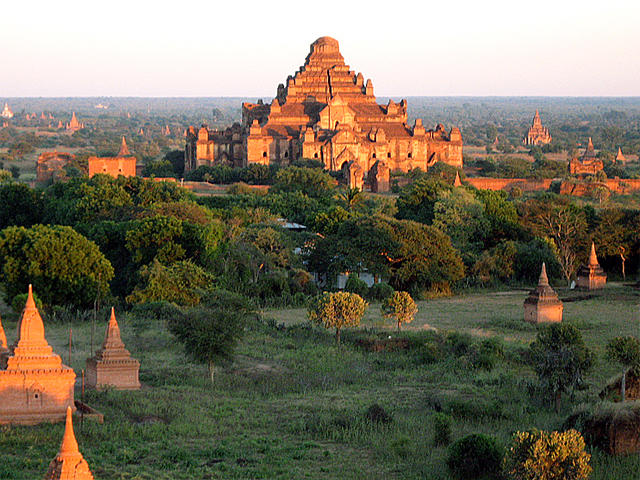
Ever since my first visit to the country in 1971, Burma has remained one of my most loved nations. I can think of few nations that have changed less during nearly four decades. It seems that the Burmese are cruelly fated to no improvement in their lives. They are still stuck exactly where they were forty years ago.

The original, indigenous peoples of what is now Burma were cousins of the Tibetans, and they remain, as television images have graphically reminded us recently, overwhelmingly Buddhist. That Burma’s Buddhism is established on the austere, Theravada, school, means that the country’s Buddhists remain especially severe and ascetic. Over the years I have been lucky to visit nearly all Burma’s major cultural sites, some many times, and there is no doubt that Burma, despite being trapped in its past, remains a wonderfully unspoilt place.

While we have been able to witness Burma’s political drama unfold day-by-day on our television screens, it is worth reminding ourselves that Burmese population have never known any government which was not both oppressive and tyrannical. The present military junta is just the latest example of such governments. It was not that long ago that the Burmese suffered the appalling atrocities of last king Thibaw, who was unceremoniously sent into Indian exile by the British colonialists.

When Burma was annexed by the British and made into a virtual province of India, it was hoped that the life of ordinary Burmese would improve. Sadly, the Japanese occupation made Burma into one of the most severe and deadly battlefields of the Second World War. When the British, worn out by war, gave India its independence in August 1947 it was inevitable that independence would be forced on Burma as well.

The hope had been that Burmese independence would herald peace and prosperity for that tortured country but all dreams of stability were swiftly dashed when the charismatic national leader General Aung San (the father of the present opposition leader Aung San Suu Kyi) was assassinated in mid-1947, some six months before the British finally left the country.

Despite all its handicaps Burma in 1948 remained a potentially prosperous country and its people should rightfully have gained affluence. Instead, ever since the dictator Ne Win brutally destroyed all the country’s political and economic infrastructure and imposed a truly dismal dictatorship, the Burmese people have been forced into penury.

So why have the people of Burma been so unfortunate? Why have they missed out on all the great economic and social advances enjoyed by the peoples of neighbouring countries such as Thailand, India and China? The obvious responsibility lies with the military’s grip on all aspects of Burmese life. There is no greater truth than the maxim than that the sword is mightier the pen. Perhaps the pen will triumph in the end but that will be small consolation to the average Burmese family who have suffered so much for nearly half a century.

A stage has been reached where all decent people the world over want Burma to escape from its military hermit status. Everyone knows in their bones that the army’s dictatorial rule is nearing its inevitable end. Yet there are nevertheless some ominous signals on the horizon. The wished-for transition to democracy, especially liberal democracy, will quite probably lead to the total disintegration of Burma into separate states based on ancient tribal loyalties. The large western province of Arakan, for example, which was once independent, and the northern Shan states may seek autonomy or even independence.

Political change in Burma may not be an altogether pleasant experience. Nor should we forget that we depend on Burma for the best, most precious jades.

Friday, August 31, 2007

Malaysia’s Fiftieth Merdeka

I'm not sure whether many people realise that three countries in Southeast Asia - Malaysia, Indonesia and Singapore - celebrate their independence day in August. It's probably a historical quirk. Thailand is the odd one out (or the smartest one) as it has never been colonised. Hence there is no need for Thailand to commemorate its independence from its former political or colonial master.

Malaysia celebrated its 50th independence day on August 31 but the road to freedom was rather complex for both Malaysia and Singapore. The two countries were colonised by the British. They fought to gain independence from the British. Malaysia got its freedom from the British in 1957. Singapore remained a crown colony of the British until 1963.

Singapore's founding fathers saw merger with Malaysia in 1963 as a way to be free from British rule. It was also tempting to be part of a bigger common market as Singapore had and still has limited natural resources.

But Singapore was booted out of the Malaysian federation in just two years due to the political schism between the ruling parties in the two countries.

It's rather interesting that Malaysian Trade Minister Rafidah Aziz, speaking at a conference in Singapore this week with her Singapore counterpart Lim Hng Kiang, playfully asked how Singapore got its independence. She asked whether Singapore became independent from Britain or Malaysia? The audience of mainly businessmen of small and medium enterprises laughed at the loaded question.

There's no neat answer, although Singapore starting celebrating its independence upon the signing of the Separation Agreement with Malaysia in 1965.

Yes, Singapore technically became independent in 1965 when it was no longer under the control of either Britain or Malaysia. But its independence from the British was first obtained when it joined Malaysia willingly.

It's just odd that Singapore has continued to honour former British colonial figure Stamford Raffles, regardless of whether it gained its independence from Britain or Malaysia.

Pix source: AP

Here's another view on Malaysia's 50th National Day.

By Uncle Cheng

31st August marks the fifty year anniversary of the independence of Malaysia. The date is obviously an important milestone in the young nation’s history and a time for both recollection and reflection. And for me it is a particularly sentimental moment because I was born and brought up in Malaysia, then known simply as Malaya.

At the time of ‘Merdeka’ (the word means independence and is borrowed from Indonesian) I was just ten years old and attending primary five. Those were difficult times for the Chinese. Most of the Chinese did not enjoy citizenship even if they were born in Malaya and the Malays feared the Chines
e and Indians.

In the eyes of the Malays the Chinese were communist sympathisers and a communist insurrection had occurred during the British colonial era. After independence the Malay language became a compulsory subject even among the non-Malays and Chinese language education was frowned upon. The key to a professional career was in either the English or the Malay language. I had to have a private tutor to teach me the elementaries of the Chinese language.

The first prime minister of Malaysia Tunku Abdul Rahman was a Malay aristocrat who managed to become a barrister after a number of unsuccessful attempts and he was probably the only important Malay leader whom the Chinese had faith in. He was a liberal western-orientated prince and always preferred compromise to confrontation.

Merdeka was proclaimed at the stroke of midnight on 31st August 1957 and the next day many Chinese were fearful of racial attacks by the Malays but fortunately
our fears proved unfounded for twelve peaceful years.

Then on May 13th 1969 the underlying racial differences between Malays and Chinese boiled to the surface in serious rioting that left many hundreds dead on the streets. Interestingly, recently declassified documents in London have suggested that the 1969 riots were staged as a coup d’etat against the old Malay aristocrats represented by the Tunku and that the rioting was a successful stratagem to transfer power to a new Malay elite which was determined further to entrench its political and economic powers.


I suppose that Malaysia has been a most fortunate ex-colonial country because in the decades since 1969 it has managed to avoid any recurrence of racial rioting. Perhaps Malaysia’s peaceful and prosperous life has something to do with the changing and shifting political balance of power in east Asia generally.


A particular turning point for Malaysia was the year 1974 when diplomatic relations were finally established between Kuala Lumpur and Beijing. Then came the opening up of China under Deng Xiao Ping and China’s economic liberalisation, which made Malaysia less conscious of China as a communist nation.

Malaysia has been a truly fortunate country where peace and prosperity have grown in strength. Yet today there is a new cloud on the horizon in the shape of Islamic fundamentalism. Moslem sharia law and religious extremes are definitely on the rise and could yet threaten the present peaceful relations between the races.

Anyway, I wish my birthplace a very happy fiftieth birthday!

Pix source: The Star

An interesting insight by Janadas of ST:

The Straits Times
Divergent strains of Malayan nationalism
By Janadas Devan

TODAY is actually the 50th anniversary of Malayan, not Malaysian, independence. Malaysia as such is six years younger, having come into existence on Sept 16, 1963. But it is perfectly natural that Malaysians should forget Sept 16 and celebrate instead Aug 31 as their founding moment.

Aug 31 was the day that Malaysia's centre of gravity - peninsula Malaya - became independent. For Malayans, as opposed to Malaysians, Sept 16 was but a way-station. Singapore, Sabah and Sarawak merged with Malaya that day; Malaya did not merge with Singapore, Sabah and Sarawak.

It took Singaporeans a while to realise the implications of that historical and constitutional trajectory. Only in retrospect did it become clear that Aug 31, 1957 had rendered Sept 16, 1963 a secondary event in Malaysia's history - and Aug 9, 1965 an inevitability. Aug 31 instituted the first separation, though nobody in Singapore saw it that way in 1957; and Aug 9, the actual Separation, had its roots in the political calculations that led to the first, though nobody realised that till eight years later.

British territories in South-east Asia were a constitutional patchwork before World War II. While Singapore, Penang and Malacca - the Straits Settlements - were under direct colonial rule, the nine Malay States of peninsula Malaya were under indirect rule. The Straits Settlements had a British Governor, resident in Singapore, but the Malay States had a British High Commissioner. They were one and the same person, but wearing two distinct hats.

The Malay States were each headed by a Sultan. They were sovereign rulers with a treaty relationship with Britain. Constitutionally, the British High Commissioner had an advisory relationship with each. In Singapore, wearing the Governor's topi (hat), he had near-absolute powers; in Kuala Lumpur, wearing the High Commissioner's topi, he was legally on foreign soil.

The British considered changing this arrangement during the war, after the Japanese had booted them out of the territories. Ensconced in London, Sir Edward Gent, an official in the Colonial Office, dreamt of a Malayan Union that would encompass both the Malay States as well as the Straits Settlements - and at a latter date, Sabah, Sarawak and Brunei too. But the British soon dropped Singapore from their plan. Demography forced their hand.

There were about 1.9 million Chinese living in peninsula Malaya at the end of the war in 1945, of whom 1.2 million were local-born. Including the 600,000 Indians, the non-Malay population exceeded the Malay population of 2.1 million. To have included Chinese-majority Singapore in the Malayan Union, the British decided, would have further alarmed Malays. Singapore was thus hived off as a separate crown colony.

Hiving it off though did not help the British gain Malay approval for the Malayan Union. Non-Malays generally liked the Union proposal, for it offered citizenship rights to all, regardless of race and creed. For the same reason, Malays objected, for the Union threatened their primacy. The abortive Union gave rise to divergent strains of Malayan nationalism.

Among Malays, it fostered Malay nationalism. The United Malays National Organisation (Umno) was founded in May 1946 to oppose the Union. Led by Datuk Onn Jaffar, then chief minister of Johor, the party mobilised Malays across the peninsula. Surprised by the ferocity of their opposition, the British jettisoned the Union and promulgated instead the Federation of Malaya in February 1948.

The Federation upheld the sovereignty of the Sultans and Malay special rights, and imposed tough citizenship requirements on non-Malays.

Only one-fifth of Chinese and Indians were given Malayan citizenship, though three-fifths of the Chinese and half the Indians resident then in Malaya were local-born. As one history of Malaysia observed, 'the term 'Malayan' was not recognised in the final Federation document, while Melayu was clearly reserved for those individuals who habitually spoke Malay, who professed Islam, and conformed to Malay custom.' Umno had triumphed - and it had triumphed by insisting on Malay, as opposed to Malayan, nationalism.

Malaya's constitutional development over the next 10 years, leading to Merdeka in August 1957, conformed to the pattern that Umno had established in opposing the Malayan Union. It agreed to more liberal citizenship provisions for non-Malays in independent Malaya than was provided for in the pre-independence federation, but only in return for constitutional guarantees of special Malay rights. Islam was declared the official religion and the primacy of Malay as the national language was emphasised.

The leading Malayan figures of the time - including Tunku Abdul Rahman - were sincere in their commitment to creating a Malayan identity that would transcend race. But they saw that ideal as a distant prospect. In the meantime, they established the new state on the basis of a modus vivendi between the three races, each led by a different political party. In practice, Malayan nationalism became predicated on the acceptance by everyone of the primacy of Malay nationalism.

Malayan nationalism remained strong, of course, an article of faith for many - and ironically, especially among Singaporeans. Though they had been excluded from the federation since 1945, most Singaporeans then thought of themselves as Malayan.

When the People's Action Party was founded in November 1954, for instance, it declared itself as 'interested in the problems of our fellow Malayans in the Federation as we are in those of Singapore'. And in 1958, after Malaya became independent, the party reiterated its determination to demonstrate to the 'three million Malays in the Federation that the one million Chinese in Singapore are ready, willing and able to be absorbed as one Malayan people, all able to speak Malay'.

It took eight years for Singaporeans to realise that Malayan nationalism, as they had conceived it, did not coincide with Malayan nationalism, as it was practised in Malaya. It took eight years for them to realise that their own Merdeka had to be achieved through Separation, not Merger.

The bilateral Singapore-Malaysia relationship over the past 50 years is rooted in this history. The leading figures in both countries - Mr Lee Kuan Yew and others in Singapore; the Tunku, Tun Abdul Razak and others in Malaysia - began with divergent conceptions of Malayan nationalism. They discovered they could not achieve their respective ideal polities without going their separate ways. Many in Malaysia today find it difficult to view Singapore other than through the prism of their own domestic racial arrangements.

The judgment of history can be ruthless in its dismissal of past sentiments, but it is inescapable. Fifty years after Aug 31, 44 years after Sept 16 and 42 years after Aug 9, Singaporeans sincerely wish Malaysians well - as a separate people.

Happy birthday, Malaysia.

Sophie's Choice
Malaysia's 50th birthday festivities clouded by worsening race relations

Celebrations galore as Malaysia turns 50
My Merdeka Message

The Meaning of Merdeka

PM Lee in KL for Malaysia's Golden Jubilee celebrations

Asia's melting pot marks 50 years

Monday, May 21, 2007

Memories of old Sikkim and Tibet

By Uncle Cheng

Last week a good friend of mine in Hong Kong sent me the obituary of Mrs Eleanor Hopkinson. I very much doubt any of my readers have ever heard of Mrs Hopkinson but my friend knew I would be interested as it brought back many happy and sad memories of the time when Sikkim was an independent state and I was the last house guest in the royal palace there before India brutally annexed the tiny kingdom in 1975. Sikkim then became India’s 22nd federal state.

Mrs Hopkinson, who has died aged 101, was the wife of the last British colonial Political Officer and Resident for Sikkim, Bhutan and Tibet. She was the last link with a now distant past. Her husband was like a colonial Governor atop the high Himalaya mountains. Through his office the British exerted powerful influence without needing actually to annexe the mountain territories. In those imperial days British policy was to preserve Tibet as an autonomous buffer between the Soviet Union, China, and British India.

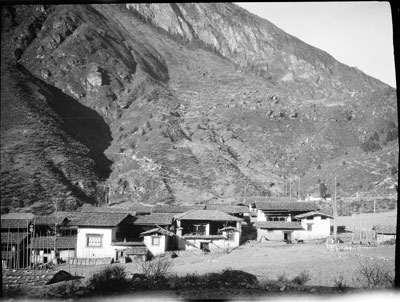
Luckily for posterity the Hopkinsons were keen photographers and kept a wonderful photographic record of their extensive travels in the most remote areas of Tibet. Their photographic archive, including some very early and rare colour slides, were given to the British Museum by Mrs Hopkinson and many of the photographs can be viewed online at Tibet Album. No doubt quite a few of my readers have visited Tibet and I strongly recommend you to take a look at those online photographs, which reveal just how much Tibet has changed in the last 70 years.

These historic photographs also brought back memories for me of the days when I travelled with the then Crown Prince of Sikkim from the capital Gangtok up to the border with Chinese Tibet. It is an area of extraordinary majestic beauty with landscapes on a vast scale.

One historical irony is that the British protected Sikkim from its powerful neighbours in the past when Sikkim was considered to be an important trading route from India to Tibet because it controls almost the only north-south mountain pass in the area. Today Sikkim has again become a strategic border and trade route between India and China. A new highway has been constructed so that the once arduous and very slow journey into Tibet Mrs Hopkinson once had to make on horseback can now be done in the luxurious high-speed comfort of a Toyota Landcruiser.

Mrs Hopkinson’s death brings down the final curtain on a forgotten era.

Thursday, May 10, 2007

The Free Economy

By Uncle Cheng

“Nothing in life is free”. We have all heard people say that. Yet I am beginning to wonder if it is still true. Nowadays so many things seem to be free. It is a perplexing phenomenon of the modern world.

Evidently it is a strict law of economics that somebody somewhere always has to pick up the bill — i.e. nothing is ever free of charge. But how to explain then the free newspapers and free telephone calls that are thrown at us? It seems the public are being showered with goods and information for which we are not being asked to pay a cent. We are living in an amazing economy full of freebies.

Wherever you look goods and information, which we once had to pay for, are now available for free. It is not just free newspapers on the MTR. When did you last have to buy a ballpoint pen, a diary or a calendar? DVDs are given to us as promotional items or we can buy them for virtually nothing.

Of course the internet is the biggest driver of this free economy. It is an odd paradox that in this age when intellectual property matters more than ever before in history, digital information is increasingly free. The internet is full of free articles, videos, and vast archives of data. Dictionaries, books, images and just about anything imaginable are legally available for free on the internet. Why buy a dictionary when it can be sourced free on the web?

Then there is something called “open-source” free software like Linux which means computer users no longer have to buy expensive Microsoft software. Email addresses, which used to be charged for, are now free. Computer memory is now available for free from Yahoo and Google.

These changes are happening at an astonishing speed. Not many years ago it could cost HK$20 a minute to phone overseas. Such a cost today is unimaginable. In fact we can now use the internet to make phone calls free of charge. Google’s CEO, who should know about such things, says mobile phones will be complimentary items financed by advertisers. An American professor predicts phone calls to any destination worldwide will cost the same minimal price, which in the case of the U.S. means between 1 and 2 US cents a minute. That would mean the cost of calling Guangzhou from Hong Kong would be the same to Buenos Aires.

I also read that even food is being given away. Tesco supermarkets in Europe have been distributing free tins of beans. Websites enable consumers to check where food is free (freesite or ourfreestuff).

Where the free economy is having by far the biggest effect is in the world of intellectual property. The cost of distributing information has quite simply crashed. Think of it like this. If you read a publication on the internet it does not matter to the publisher if you are one of 1,000 readers or one of 1 million readers — the cost is the same. Maybe it is only a matter of time before all intellectual property is free of charge.

Old accounting methods are being turned upside down. Financial institutions used to sell investment analysis but give it away free. An internet user who prints a newspaper article bears the cost that was once borne by the publisher. A whole new business world is being created at record speed. A new invention is the “freemium,” which is a marketing ploy to tempt consumers with free items before selling then extras at premium high prices. The phone website Skype has a neat trick — members call one another for nothing but must pay to call non-members. Publishers have learnt that readers of their free-to-view websites can be made to pay for special interest items like football games.

Unfortunately there are some prices that are immune to the internet. Restaurants for example. The cost of eating out just goes up and up. I will be horrified when a meal in my favourite restaurant costs $1,000 a head and it will be little consolation that the cost of a hour-long phone call to San Francisco is only $10.

Sophie's note: Sigh, Sophie has been blogging for free. Sophie has not earned any money to buy dog biscuits, which are not free in the real or virtual world.

Saturday, April 21, 2007

London Resurgent

By Uncle Cheng


Did you read the recent news item that one of a set of four penthouse flats in central London has been sold off-plan for a staggering £85 million (HK$1,300,000,000)? A few weeks earlier came the news that New Year bonuses paid out by financial institutions in the City of London topped a staggering £9 billion (HK$138,000,000,000). London, to put it mildly, is riding the crest of a wave of wealth.

Quite why London has suddenly boomed now is a bit of mystery. Experts say that New York shot itself in the foot with over-regulation after some corporate scandals and has made itself unattractive to foreigners because of excessively tough visa rules. Even the Mayor of New York is warning that New York’s very future is threatened by London. Mainland Chinese and Russian companies are choosing to issue their shares in London rather than New York.

This is all very strange because only a few years ago Britain was being warned that if it did not adopt the new European currency, the Euro, London would lose out as a financial centre and be replaced by Frankfurt. Well, Britain did not join the Euro and today by far the biggest trading centre for Euros is London, not Frankfurt. Then Germany’s biggest bank Deutsche Bank moved its investment banking headquarters from Frankfurt to London.

You might ask why what happens in London interests me so much? There are many reasons, and reasons that Hong Kong should pay attention to. First of all, I did law pupillage there and one of the reasons for London’s present pre-eminence is the city’s concentration of legal talent. Hong Kong is also home to a pool of legal talent and we must ensure it stays here. Secondly, London, and New York before it, benefited hugely by being cultural melting pots. A staggering forty percent of Londoners are foreign-born and they speak an incredible 300 languages. Of course, there is no way Hong Kong can compete with such figures but we must keep our economy open to talent from anywhere in the world, not just from the mainland.

London, like Hong Kong, does not tax rich foreigners on their overseas income and this has proved a huge magnet to the world’s new billionaires. There are said to be 23 Pound billionaire residents in London, and of those 11 are foreigners such as the Indian Lakshmi Mittal (worth £14.8 billion) and the Russian Roman Abramovich (worth £9.1 billion), owner of Chelsea football club.

Then there is London’s population, which after decades of decline, has been rising very steeply mainly due to immigration from eastern Europe. Even the UK’s Chinese population has risen fast recently and now totals about 600,000.

Perhaps I should add that I do have a selfish interest in London’s economic well-being because I own a house there which must rank as the best investment I ever made in my entire life. In not that many years it has appreciated by over 600 percent and by an extraordinary 35 percent in 2006 alone. A lot of the demand has come from foreign buyers and I have heard that native Londoners wanting to buy residential property are complaining that they can no longer compete with super-rich foreigners who think nothing of upping a bid by a million Pounds.

So for the moment at least London is again the capital of capitals. The city is abundantly confident, the restaurant bills have gone stratospheric, there is creativity and dynamism everywhere. The sceptics say even Athens and Rome fell in the end as confidence lapsed into decadence.

Yet I see no sign of London losing its grip just yet. Indeed London’s affluence and its dominance of international finance seems likely to strengthen further. Even the French, who as you will know have fought many wars with the British, have had to acknowledge London’s success. Nicolas Sarkozy, campaigning as a candidate to succeed Chirac as President of France, went to London recently to address London’s 350,000 French residents.

London, you see, has become the seventh largest French city in the world.

Tuesday, April 10, 2007

Hong Kong election

Sophie is still speechless over the BIG JUMP in the salary of Singapore ministers. She has taken a vow of silence for another day.

In the meantime, let Uncle Cheng do the talking, not about Singapore but about the recent election in Hong Kong. Hong Kong may not have such highly paid government officials compared to Singapore but universal suffrage is still an alien concept in the special administrative region of China.

By Uncle Cheng

Last Sunday turned out to be a beautiful day weather wise if nothing else. It also happened to be election day and it obviously came as no surprise that our Chief Executive (Xinhua Photo: Hong Kong chief executive Donald Tsang Yam Kuen waves hands in Hong Kong, south China, March 25, 2007) was elected by a large margin. Indeed, it would have been a massive shock to the system if the result had been otherwise.

Like most of Hong Kong’s population I watched the electioneering process during the past few weeks. Even though the eventual result was totally predictable, I believe this election marks a very healthy and pivotal stage in Hong Kong’s constitutional development. As one impartial observer remarked to me, this first-ever semi-contested election has demonstrated just what a fully contested election might be like. It was like a maiden flight of a new aeroplane to demonstrate its airworthiness.

The big question in my mind remains where in the world can you find a truly contested election where the result is totally unpredictable? Unexpected election results are exceedingly rare events. Perhaps the presidential election in the United States that brought George Bush to power counts as an unexpected result in the sense that, after weeks of delay and procrastination, it was not the people of the United States who made the final decision but the nine judges of the Supreme Court of the United States — none of whom is democratically elected.

Those nine justices are in fact appointed by Presidents and it is common knowledge that Republican Presidents usually nominate Republican judges and Democratic Presidents choose fellow Democrats.

Returning to Asia I find it hard to recall any election in recent years which has delivered an unexpected result. Wherever opinion polls are used election results become even more predictable because opinion polls have become a highly refined science able to predict both voter turnout and voting intentions with scientific accuracy. You could even argue that opinion polls could replace actual elections!

Hong Kong’s election last Sunday fits into this pattern. Everyone knew what the election result was going to be. It was simply impossible for Donald Tsang to be denied victory. Why then all the fuss from the democratic camp that the election was a farce? The democrats make it sound as if the result surprised them.

For myself I see the election very differently. It was a part, an important part as well, in the process of Hong Kong’s constitutional development. I did not witness anything farcical or surprising. The results was predictable as any elections anywhere. Like all elections the result was known beforehand.

Of course, the true basis of the bitter democratic condemnation of the election is disappointment that universal suffrage is taking such a long time to arrive. Democratic campaigners are disappointed that they could not stand as candidates at the election, but where were their voices before 1st July 1997?

The big question is whether this exercise in political predictability was good or bad for democratic development. Was Alan Leong's quixotic challenge a sign of progress? Were the more extreme democrats right to scorn what they called Leong's hopeless candidacy?

It was interesting that the protest march by the Civil Human Rights Front could only muster less than 5,000 supporters. Universal suffrage hardly seems to be a burning issue for Hong Kong's citizens. Perhaps the population at large take the sensible view that the existing system has served Hong Kong well. Society and the economy are in a good condition.

I also suspect that the public have been pleasantly surprised by Donald Tsang electioneering performance --- "Bow Tie versus Pocket Square". Increasingly, as the weeks went by the Chief Executive appeared more and more in charge of his brief and confident.

A fully democratic election under universal suffrage would have returned the same result!

The truth is Hong Kong constitutional system remains a work in progress. Stay tuned!

Tuesday, March 06, 2007

Chinese Treasures

By Uncle Cheng

From now until March 25th if you wish to see some of the rarest Chinese works of arts, which were taken to Taiwan on the eve of Communist rule in China, you must go to Taipei. The National Palace Museum in the city has just completed a massive programme of renovation which has transformed the museum and enables much more of the priceless collection to be displayed.

So it is worth recalling how it happened that provincial Taiwan came to be the repository of so much of the priceless imperial collection. It is a tale of huge intrigue and great heroism which exemplifies the bitter disputes that raged between two divergent ideologies, Nationalism and Communism, as they battled to be guardian of the Chinese nation’s cultural heritage and hence its very legitimacy.

Incredible as it was given the vicissitudes of much of Chinese history nearly all the great imperial art collection, which had been mainly amassed during the early years of the Qing dynasty, had remained virtually intact and undamaged right up to the Republican era. It is also worth recalling the great irony that most important parts of the collection were assembled, not by the Han Chinese as we might suppose, but by the Manchu emperors, who were most anxious to establish and prove how loyally Chinese they were.


As is well known both Beijing and Taipei now boast their own palace museums although the Taipei one is called the National Palace Museum while the one in Beijing is known simply as the Palace Museum.

It was in 1925 that the Palace Museum in the Chinese capital first opened its doors to the public but at the time most of the items in the collection were without any inventory and it is thought that in those troubled times some items, though not many, were stolen by corrupt officials and made their way to collections outside China. Perhaps the last complete inventory before the modern era was the one conducted in 1816 which documented about 15,000 items of calligraphy and paintings alone that had been collected by the highly cultured Emperor Qianlong.


A major crisis for Beijing collection came in 1911 when the Emperor Puyi was forced to abdicate. When Puyi then became a puppet emperor of Manchukuo he took a substantial amount of the imperial art collection with him.

The collection faced further travails when civil war broke out across China in the 1930s. Worried curators then embarked on an extraordinary endeavour that saved the collection for the nation. They hurriedly packed the bulk of the Palace Museum’s collection into a staggering 20,000 wooden crates. These crates contained just about everything that could be lifted and easily moved. There were bronzes, jades, porcelain, paintings, calligraphy and rare books.


At first the crates were set off on a dangerous journey towards Shanghai from where it was intended to take them on to Nanjing, all the time closely guarded by the dutiful museum curators from Beijing. But as the civil war moved south towards Nanjing the bulk of the 20,000 crates had to be diverted for safekeeping to the nationalist capital of Chungking. Ultimately, only about a fifth of the 20,000 crates, that is some 4,000 crates, were taken by the Nationalists to their final base in Taiwan. It is the contents of those 4,000 crates which now form the nucleus of the Taipei collection.

Although the Taipei museum is home to only a fifth of the collection which the Nationalists took from Beijing, the curators and Chiang Kai-shek were careful to select some of the best artifacts for shipment to Taiwan, which is why many art experts maintain the National Palace Museum houses the cream of the imperial collection such as the large paintings of the early Tang and Sung dynasties.

However, if you go to the renovated Taipei museum, do not expect that you will be able to view the entire collection. For conservation reasons the museum never displays all its treasures at one time. This is because some objects, especially the early paintings are so fragile that they are only displayed for forty days every three years. To see everything you must return to Taipei every three years!

Another celebrated moment in the history of that part of the imperial collection which was left behind by the Nationalists came during the height of the cultural revolution. A group of Red Guards had broken their way into the Palace Museum raising fears that the art collection would be destroyed. In the very nick of time the then Premier Chou En-lai issued his famous directive “the Gugong belongs to the nation and to the people and must be protected”. Both the Forbidden City and the objects it contained were rescued.

Perhaps the greatest irony of all is that we owe the preservation of our nation’s imperial art collection both to the Nationalist Chiang Kai Shek and his ideological enemy Chou En-lai. The unhappy result is that the collection continues to be split between Beijing and Taipei.

Saturday, February 24, 2007

Lunar New Year

By Uncle Cheng


Of all Chinese festivals the lunar new year festival is obviously the most extensively celebrated. This is despite the familiar Chinese saying that the winter solstice is the most important event in the Chinese calendar. The fact is that the new year festivities are what we look forward to rather than the winter solstice.

Allow me to share with you some thoughts on another festival drawn from my memories of distant childhood days in Malaysia.

As we all know the Chinese new year customarily lasts for fifteen days but today, on the 24th day of the 12th moon we pay homage to the kitchen god. Worship of the kitchen god has always intrigued me because from my earliest recollections in Malaysia I recall that sacrifices had to be made to the kitchen god today.

As I grew up I learnt more about the historical background of the kitchen god, which has great historic ancestry in Chinese custom dating back to well before the arrival of Confucianism and Buddhism. Indeed, the kitchen god can be traced back into Chinese antiquity and the very early days when people practised a superstitious religion called “animism”.

The kitchen god was a much respected and very popular god, which may explain his staying power through the centuries. He was given the friendly title “prince of the oven” (tsao wang) because he was identified with the inventor of fire. And fire of course was heaven’s greatest gift to mankind, especially because fire enabled food to be cooked. It was not long before tsao wang came to personify the domestic home.

Even to this day cooking and the kitchen are absolutely essential ingredients of Chinese culture and our belief system. Of course food is an important aspect of the cultures of many other civilisations, such as the French and the Indian, but somehow for we Chinese is much more than culture — it is part of our very existence and system of beliefs. For example during the Han dynasty the emperors used to offer the kitchen god sumptuous sacrificial devotions.

Since early days belief in the kitchen god became so embedded in the Chinese psyche that the Taoists and the Buddhists readily adopted him into their pantheons of gods. The Taoists even created their own myths which gave the kitchen god a human form for the first time. Before long statues of the kitchen god appeared and became the practice to smear the god’s lips so as to ensure that he would not make any adverse reports to heaven.

So it is that I clearly recall in Malaysia we would keep our home’s kitchen god meticulously clean on his festival. On that auspicious day knives could not be sharpened, brooms stored away and sweet offerings were made to the god of such things as melons, cakes, fruits, sticky rice, and always honey. It was with the honey that the god’s lips were smeared so that he would not talk too freely in the heavenly world and to ensure that his words would be sweet and flattering. Our hope was that he would therefore promote the good deeds of our family and forget our shortcomings.

As a child I was told that in southern China in the nineteenth century some families habitually used opium as a substitute for sugar to make the kitchen god drowsy and so ensure that when he appeared before the jade emperor he would be suitably good-humoured and tolerant. The British, who introduced opium to China, inadvertently altered this Chinese tradition!

At our home when all the offerings to the kitchen god had been made, the ritual bowing had been performed and all our prayers had been recited, a paper image of the kitchen god was set on fire so that he was sent skywards in a chariot of fire to heaven. Preparations for the lunar new year itself could only be started once the kitchen god had been ceremoniously and contentedly dispatched on his heavenly way.

Therefore dear readers it is my earnest wish that the kitchen god this year will send good messages to the jade emperor on your behalf and I wish to you all a happy and prosperous new year.

Wednesday, January 31, 2007

Letter from Singapore

By Uncle Cheng


Singapore may not seem the most obvious place for Hong Kong people to choose for a holiday but that is where I found myself for family reasons last Christmas and new year. It was a revealing experience and I kept on making comparisons in my mind between Singapore and Hong Kong.

The first thing I learnt, and which becomes obvious in discussions with Singaporeans, is that Singapore is on the verge of an economic boom. After years of slow growth there is great optimism that new government policies are lifting both the economy and peoples’ spirits.

Property prices are rising markedly, foreign bankers are flooding in, huge public infrastructure projects are underway, and investment capital is streaming into local bank accounts from such local nations as Indonesia and even from distant Europe. Suddenly all the ingredients for economic growth are looking good.

One of my sources is a nephew of mine who is in a favourable position to know such things as his work keeps him in close touch with business and economic prospects in Singapore and the nearby region. I was especially interested to hear him explain how the government’s decision to reverse decades of anti-gambling policy and licence two super-casinos has transformed the economic horizon. It reminded me of how Macau’s economic fortunes were totally transformed by the decision to end the old casino monopoly and open the gambling market to virtually open competition.

One argument always used by people who oppose casinos is that they attract crime, triad activity and get poor people into financial difficulty. But as everyone knows the Singapore government has always prided itself on its low crime rate and its very tough treatment of all criminal behaviour. How, I wondered, will the government be able to square its anti-crime reputation with the new casinos. Well, as usual, Singapore has thought the issue through and announced a range of measures which it says will keep the casinos free of crime.

Yet despite its great wealth, efficient government and highly disciplined society Singapore’s miniscule size remains its greatest disadvantage. You cannot flex impressive muscles when you are a dwarf. The city state’s prosperity has to depend on the friendliness of its neighbours.

No neighbour is more crucial than Malaysia for it is from there that Singapore imports fresh water and daily foodstuffs, especially vegetables. It reminds me of Hong Kong’s dependence on the Mainland for the same things. Incidentally, the worst floods in the state of Johor for many years threaten large increases in Singapore vegetable prices through the lunar new year.

An irritating problem between Singapore and Malaysia has been the disagreement about a bridge to replace the existing solid earth Causeway. When no agreement could be reached about the proposed bridge which Malaysia favoured, the Malaysian government decided to spend millions on building new extravagant immigration facilities at its border. As Malaysia had made the case for an overhead bridge, which would have opened up the waterway to small shipping, Singapore hesitated and raised other issues such as the sale of sand and the use of Malaysian air space. Indeed the bridge became such a prickly issue that at one stage Malaysia came up with the bizarre suggestion that the bridge should be built without Singapore's approval. Presumably that would result in the bridge stopping in mid-air at the Singapore border!

Next week I will continue my look at Singapore and in particular I will make some comparisons between Hong Kong and Singapore — comparisons that, I regret to say, are not favourable to Hong Kong.

Sophie's note: Please see Singapore's marketing pitch for Marina Bay, the centrepiece of the Lion City.